
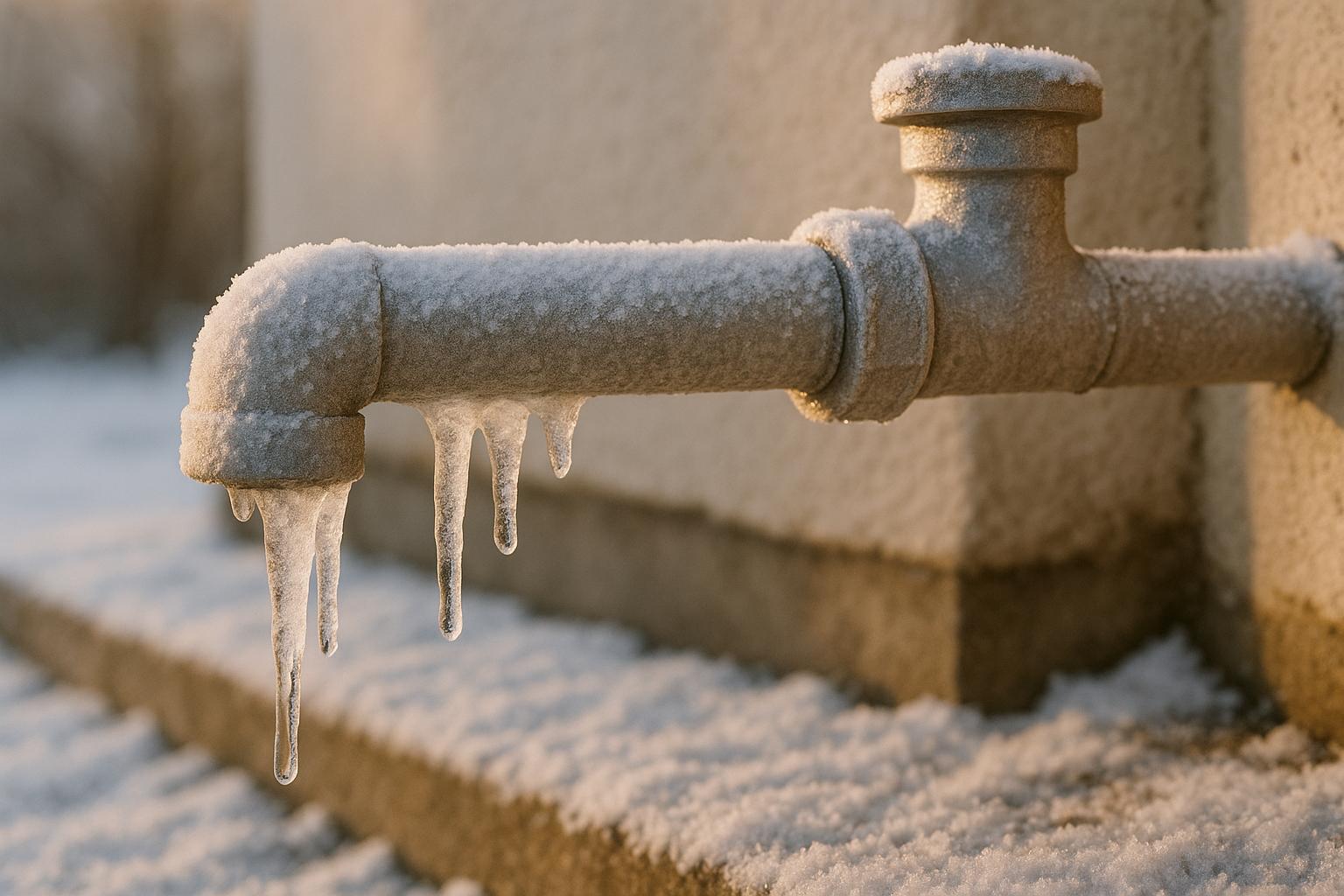
Frozen pipes can lead to major water damage and costly repairs. When water freezes, it expands, putting pressure on pipes that can cause them to crack or burst. Here’s what you need to know to identify and prevent frozen pipes:
- Signs of Frozen Pipes:
- No water or low water pressure from faucets.
- Frost or bulging on exposed pipes.
- Strange noises like gurgling or bubbling.
- Damp spots, puddles, or water stains around your home.
- High-Risk Areas:
- Pipes in unheated spaces like basements, attics, garages, or crawl spaces.
- Exterior walls with poor insulation.
- Outdoor plumbing like garden hoses or faucets.
- Prevention Tips:
- Insulate exposed pipes with foam, fiberglass, or rubber.
- Keep your home warm (above 55°F) and let faucets drip during freezing weather.
- Seal gaps or cracks that let in cold air.
- What to Do If Pipes Freeze:
- Shut off your main water supply to prevent flooding.
- Open faucets to relieve pressure.
- Safely thaw pipes using a hair dryer or space heater – never use open flames.
- Call a plumber if you notice cracks, leaks, or no improvement after thawing.
Acting quickly can save you thousands in repairs. Preventive measures like insulation and maintaining warmth are your best defense against frozen pipes.
Frozen Water Pipe – How to Test Your House for Freezing Pipes
Signs Your Pipes May Be Frozen
Catching frozen pipes early can save you from expensive water damage and repairs.
No Water or Low Water Pressure
If you suddenly notice no water or just a weak trickle when you turn on a faucet, a frozen pipe could be the culprit. This happens because water expands as it freezes, creating a blockage that restricts or completely stops the flow. Pay extra attention to faucets on exterior walls or in unheated areas like basements, crawl spaces, attics, garages, or under kitchen cabinets. At first, you might experience reduced water pressure, but if freezing temperatures persist, the pipe could become entirely blocked. Also, inspect any exposed pipes for visible signs of freezing.
Frost or Bulging on Exposed Pipes
Sometimes, frozen pipes reveal themselves through visible signs. Check for frost buildup on pipes in unheated spaces such as basements, crawl spaces, or garages. Frost on the outside of a pipe suggests the surrounding temperature has dropped to 32°F or below, allowing ice to form inside. Another red flag is bulging or swelling along the pipe, which occurs when freezing water stretches the pipe walls. This is a serious warning that the pipe could burst. Pay close attention to pipes near where your water line enters the house through the foundation, as these areas are often poorly insulated and prone to freezing.
Where Pipes Are Most Likely to Freeze
Knowing which parts of your plumbing are most at risk can help you prioritize your efforts to prevent frozen pipes.
Extreme Cold and Wind
Pipes in unheated areas are particularly vulnerable when temperatures dip below 20°F. Wind plays a significant role here, speeding up heat loss and reducing the time it takes for pipes to freeze. Even a small crack or gap can let in enough cold air to cause problems. According to a survey of plumbers, issues with burst pipes often start when temperatures fall into the teens.
The National Weather Service clarifies that while wind chill doesn’t lower the actual air temperature, it does make pipes freeze faster.
"With severe wind chill, a tiny opening can let in enough cold air to cause a pipe to freeze." – Becky Schuerman, Extension Associate
Next, it’s essential to recognize the specific areas in your home that are more prone to freezing.
Problem Areas in Your Home
Certain spots in your home are more likely to experience frozen pipes. For instance, pipes running through exterior walls are highly susceptible because they’re exposed to outdoor temperatures and often lack proper insulation. Unheated spaces – like crawl spaces, attics, basements, garages, and even areas behind cabinets – are also common trouble zones. Outdoor plumbing, such as garden hoses, outdoor faucets, and backflow devices, faces direct exposure to freezing temperatures, making them particularly vulnerable.
Older homes, in particular, come with their own set of challenges.
Older Homes and Poor Insulation
Homes built decades ago often have outdated construction methods and insufficient insulation, putting pipes at greater risk of freezing. Many of these homes have plumbing located in unheated areas where indoor temperatures can drop dangerously close to outdoor levels.
"Older homes have a lot of charm, but when it comes to plumbing, they can also present unique challenges – especially in the winter. Frozen water lines are more common in these homes due to outdated materials, poor insulation, and less efficient heating systems." – S & B Plumbing
Aging plumbing systems are another concern. Over time, pipes lose their ability to retain heat, and wear and tear can lead to cracks that let in cold air. On top of that, older heating systems often struggle to maintain consistent warmth throughout the house, leaving some areas cold enough for pipes to freeze even when other rooms feel comfortable.
What to Do If You Think Your Pipes Are Frozen
If you’ve spotted the signs of frozen pipes, taking quick action can help you avoid costly damage. If you notice a faucet only producing a trickle of water, it’s time to act.
"Knowing what to do when your pipes freeze could save you thousands of dollars, since burst pipes can cause massive property damage by flooding areas of your home." – Blind & Sons
The first step is to shut off your main water supply valve. This prevents flooding in case the pipe has already cracked. If you’re unsure how to do this, contact your utility’s emergency line for guidance.
Turn On Faucets to Relieve Pressure
Once you’ve turned off the main water supply, open the faucets connected to the frozen pipe. This helps release pressure in the system, reducing the chances of a pipe bursting. Even if no water comes out right away, leave the faucet open. As the ice melts, the water will have an escape route.
After relieving the pressure, focus on safely warming the pipe.
Thaw Pipes Safely
Find the frozen section of the pipe. Common locations include basements, crawl spaces, attics, areas along exterior walls, or under sinks. Look for visible frost as a clue. Once you’ve identified the spot, use safe heating methods to thaw it.
A hair dryer is a great tool for this, as it directs warm air precisely where it’s needed. For larger areas, a space heater can help – but always keep it at least three feet away from anything flammable. Avoid using open flames, blowtorches, or other risky methods, as these can damage the pipe or create fire hazards. Start heating near the faucet and move toward the frozen section. This ensures that melting water can flow out freely.
While you’re thawing the pipe, take steps to limit further cold exposure.
Block Cold Air and Improve Insulation
As you work, try to keep cold air away from the frozen pipe. Use towels, plastic sheeting, or cardboard to temporarily seal any gaps or drafts near the area. If the pipe is under a sink, open the cabinet doors to let warm air circulate around it. In crawl spaces or basements, a space heater can help raise the temperature, but always follow safety instructions.
Be on the lookout for leaks. If you notice water dripping or cracks in the pipe, stop thawing and call a professional immediately.
If you’ve been thawing the pipe for over an hour with no success, it’s time to bring in an expert. Continuing to work on it could cause more harm than good. Professional assistance may also be necessary if normal water flow doesn’t return after these steps.
sbb-itb-1e60d4b
How to Prevent Pipes from Freezing
Catching early warning signs is helpful, but taking steps to prevent frozen pipes can save you from costly repairs and headaches. The key? Insulate exposed pipes, maintain a warm home, and let water flow during freezing weather. Start with solid insulation to protect pipes in vulnerable areas.
Add Insulation to Exposed Pipes
Insulating pipes is your first defense against freezing. Start by identifying pipes in unheated spaces like attics, basements, crawl spaces, garages, and outdoors. These spots are especially at risk since they don’t benefit from your home’s heating system.
Before buying insulation, measure your pipes to ensure a snug fit. Here’s a comparison of popular insulation options:
| Insulation Type | Cost Per Linear Foot | Key Benefits |
|---|---|---|
| Foam | $0.20 – $1.35 | Budget-friendly, flexible, easy to install, mold-resistant |
| Fiberglass | $0.30 – $1.50 | Strong thermal resistance, fire-resistant, works for hot and cold pipes |
| Rubber | $0.90 – $1.45 | Flexible, resists mold and condensation, fire-rated |
Polyethylene foam insulation is a favorite among homeowners. It’s lightweight, flexible, and great at resisting moisture. Foam insulation strikes a good balance between cost and effectiveness for most situations.
Installing insulation is simple. Cut the material to the right length, wrap it around the pipe, and secure it with tape, zip ties, or adhesive strips to keep it in place. Seal any gaps or joints to block cold air from sneaking in.
For extremely cold conditions, consider adding heat tape or cables for extra protection. Don’t forget outdoor faucets – they can benefit from insulated covers or spigot sleeves made from weather-resistant materials filled with insulating foam.
Keep Your Home Warm Enough
Your home’s heating system is critical in keeping pipes from freezing, especially for bathroom and kitchen pipes that typically lack insulation.
Set your thermostat above 55°F during cold weather to keep pipes warm. During particularly chilly periods, open cabinets and vanities to let warm air circulate around pipes, especially those along exterior walls. Even in warmer climates, it’s a good idea to check pipe insulation during unexpected cold snaps.
Maintaining steady indoor temperatures is essential, but keeping water moving through your pipes adds another layer of protection.
Let Water Drip During Cold Spells
Letting faucets drip when temperatures dip below 20°F for three hours or more can prevent freezing. The reason? Moving water takes more energy to freeze than still water.
"Maintaining water flow helps prevent ice formation within pipes. Moving water requires more energy to freeze than stationary water, and a steady drip can create enough movement to keep water from solidifying, significantly reducing the risk of pipe failure." – Freeze Miser
Focus on the faucet farthest from your water meter to ensure water flows through the longest stretches of your plumbing system. A slow trickle – about one drop every few seconds – is usually enough. If temperatures approach 0°F, you can slightly increase the flow for added safety.
For single-handle faucets, adjust the handle to allow water to flow through both the hot and cold lines. If that’s not possible, let cold water drip, as it’s more effective and energy-efficient.
This technique also helps relieve pressure that can build up between an ice blockage and the faucet, reducing the chance of a burst pipe when the ice thaws.
"The real reason a dripping faucet can help prevent pipes from bursting is that the constant drip relieves pressure that is building up in the pipes between the ice blockage and the faucet, and helps to prevent them from bursting when the pipes begin to thaw." – Laurie L. Dove
Keep faucets dripping as long as temperatures stay at or below 20°F. While this might slightly increase your water bill, the cost is minimal compared to potential repair expenses, which can range from $1,000 to $5,000 or more. In some cases, claims for burst pipes have averaged over $10,000 for homeowners and around $27,000 for businesses.
When to Call Longmont Emergency Plumbers

Frozen pipes can quickly escalate from a minor inconvenience to a costly disaster. Knowing when to call in professional help can save you from extensive water damage and hefty repair bills.
Problems That Require Professional Attention
There are certain warning signs that should prompt an immediate call to Longmont Emergency Plumbers. If you’ve lost water flow entirely, it could indicate a blockage caused by ice, which increases the risk of pipes cracking. Strange gurgling noises from your pipes might mean trapped air due to ice formation, disrupting normal water flow.
Visible damage is another red flag. Cracks, bulging pipes, or ice seeping out are clear signs that the pipe is compromised and at risk of bursting. Frost on exposed pipes is also a strong indicator that the freezing process is underway.
If your water pressure drops and is accompanied by odd sounds like bubbling or gurgling, it could signal a severe blockage. Hearing running water when no faucets are open is especially concerning – it might mean a pipe has already burst behind walls or under floors.
Other environmental clues around your home, such as damp spots, puddles, or water stains on drywall or ceilings, could point to leaking pipes. Sagging walls or ceilings, peeling paint, or bubbling wallpaper are signs of significant water damage. Additionally, foul odors from drains or faucets may suggest a sewage backup, while musty smells could indicate hidden water leaks and mold growth.
To put it in perspective, even a small crack – just 1/8-inch wide – can release over 250 gallons of water daily. The average insurance claim for water damage caused by frozen pipes is around $10,000. These issues demand immediate professional intervention to prevent further damage.
24/7 Emergency Service in Longmont, CO
Longmont Emergency Plumbers is available around the clock to handle frozen pipe emergencies. Their 24/7, same-day service helps reduce the risk of pipe bursts and extensive water damage.
Whether it’s a residential or commercial property, their team of skilled technicians is ready to respond – even on weekends and holidays. They use advanced thawing techniques and specialized tools to locate frozen sections and safely restore water flow without causing additional damage. If necessary, they can also perform full pipe repairs.
Emergency plumbing services typically range from $100 to $500, with an average hourly rate of $170. While these costs may seem high, they pale in comparison to the potential financial burden of water damage from burst pipes.
Beyond immediate repairs, Longmont Emergency Plumbers also offer preventive advice. After resolving the issue, their technicians can assess your plumbing system for vulnerabilities and recommend measures to help you avoid future freezing problems.
Conclusion: Protect Your Pipes and Avoid Costly Damage
Frozen pipes can turn from a small inconvenience into a major headache in no time. Be on the lookout for warning signs like no water flow, strange noises, visible frost, strong odors, or damp spots. Catching these issues early can make all the difference in preventing serious damage.
Spending on preventive maintenance is a smart move. For every dollar you put into prevention, you could save up to $5 on future repairs. In fact, research shows that about 90% of plumbing disasters can be avoided with proper upkeep.
Simple steps like insulating exposed pipes, keeping your home warm, and letting faucets drip during freezing weather can save you from hefty repair bills. But if these measures fall short, don’t hesitate to call in the experts. If you notice any of the signs mentioned above, act fast. Longmont Emergency Plumbers offers 24/7 emergency services to help you avoid the steep costs of burst pipes and water damage.
Taking action now can save you thousands in repairs and restoration. Protect your pipes and your wallet with early detection and maintenance.
FAQs
How can I tell if my pipes are frozen if I can’t see them?
If your pipes are tucked away out of sight, there are still some telltale signs that something might be wrong. For instance, a sudden drop in water flow or no water coming from your faucets can be a major red flag. Strange sounds, like gurgling or banging, when you turn on the tap are another common indicator. You might also spot damp patches, water stains, or even frost in areas where pipes are hidden, such as behind walls or beneath sinks.
Think you might have frozen pipes? Don’t wait to take action. Turn off your water supply immediately to avoid potential bursts or costly damage, and get in touch with a professional plumber right away. If you’re in Longmont, CO, Longmont Emergency Plumbers is available 24/7 to handle plumbing emergencies, including frozen pipes, before they turn into bigger problems.
What should I do if I think a pipe has burst in my home?
If you think a pipe has burst, it’s crucial to act fast to reduce potential damage. Start by shutting off your home’s main water supply to stop water from flowing. Then, open all your faucets to drain any leftover water and ease pressure in the pipes. If the leak is close to electrical systems, make sure to turn off power to that area to avoid any safety risks.
After handling these immediate steps, reach out to a licensed plumber right away for professional help. If you’re in Longmont, CO, Longmont Emergency Plumbers offers 24/7 service – even on weekends and holidays. Their skilled technicians are ready to get your plumbing back in working order quickly and effectively.
What type of insulation is best for preventing frozen pipes in very cold weather?
When temperatures drop to extreme lows, protecting your pipes from freezing becomes a top priority. Materials like foam pipe insulation, mineral wool (rockwool), phenolic sleeves, and spray foam insulation are excellent choices. These options are specifically designed to resist low temperatures and help keep your pipes insulated.
For even more security, consider pairing your insulation with heat tape or heat cables. These tools work to maintain a safe temperature for your pipes, even in the harshest winter weather. Taking these steps can help you avoid expensive repairs and the headaches caused by burst pipes and water damage.