
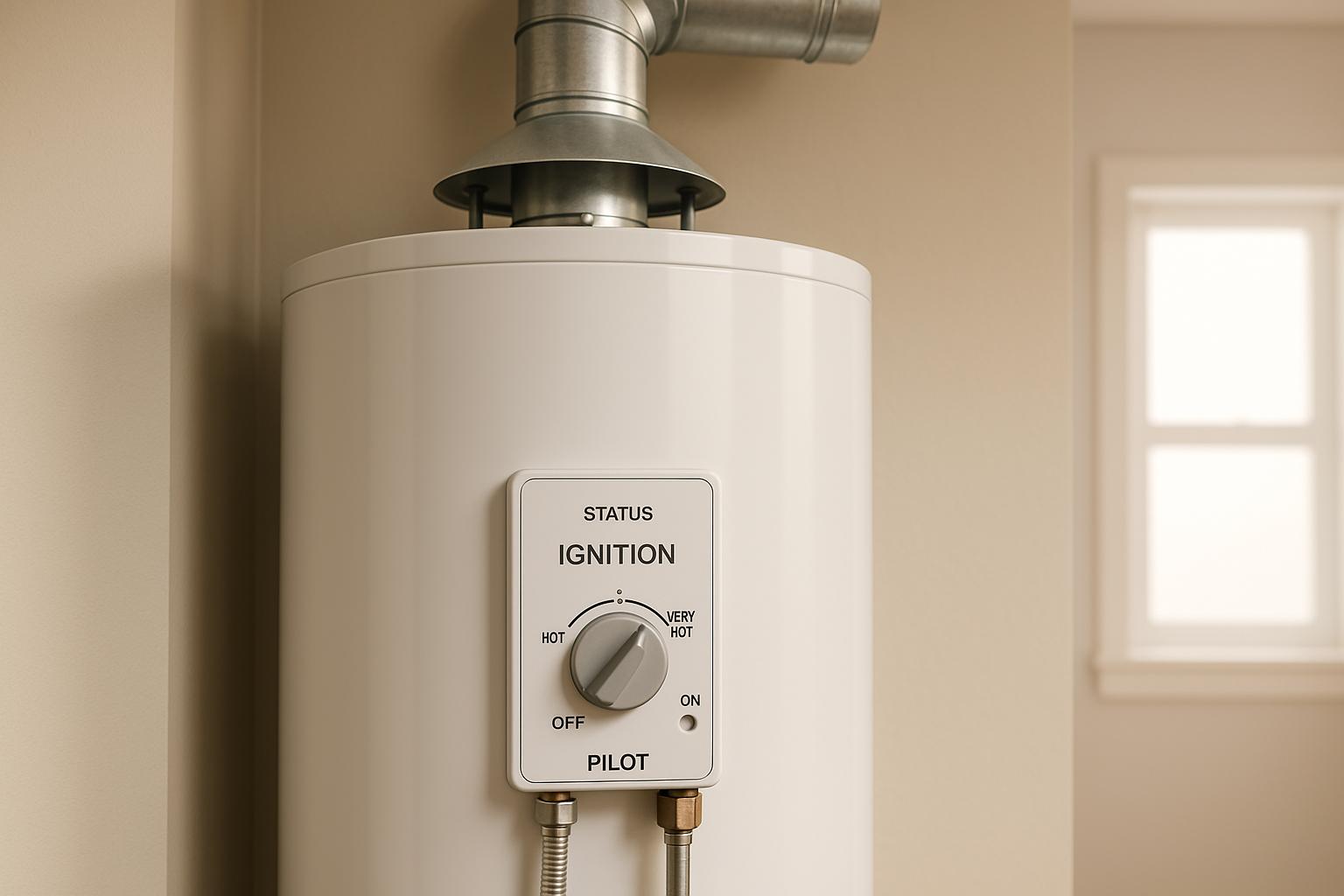
Gas water heater ignition issues can disrupt your daily routine and pose serious risks. Common signs include flickering or yellow flames, odd noises, inconsistent water temperatures, and soot buildup. Problems often stem from dirty or worn parts, gas supply issues, or clogged components. Here’s a quick breakdown:
- Pilot Light Issues: Often caused by dirty thermocouples, low gas pressure, or blockages.
- Igniter Malfunctions: Worn electrodes, debris buildup, or weak electrical connections can prevent sparks.
- Clogs: Dust or debris in pilot tubes or burner assemblies can block gas flow.
- Gas Supply Problems: Low or high pressure, leaks, or damaged lines can disrupt ignition.
Regular maintenance like cleaning, annual tank flushing, and part inspections can prevent many issues. However, for safety, always call a professional for repairs, especially if you notice gas smells, yellow flames, or persistent ignition failures. Longmont Emergency Plumbers in Longmont, CO, offers 24/7 expert services to quickly and safely resolve these problems.
Top 10 Gas Water Heater Pilot Light Problems! Won’t Light, Won’t Stay Lit!
Common Causes of Gas Water Heater Ignition Problems
Knowing the reasons behind gas water heater ignition problems can help homeowners spot and fix issues before they become bigger headaches. Ignition failures often result from neglected maintenance or faulty components.
Pilot Light Won’t Stay Lit
When the pilot light keeps going out, the culprit could be a dirty or worn thermocouple, low gas pressure, trapped air in the lines, or blockages in the pilot tube or ECO switch. Sometimes, clutter or debris around the heater restricts airflow, starving the pilot flame of oxygen. Regular cleaning and maintenance can go a long way in preventing these problems.
Another common issue involves the automatic igniter.
Automatic Igniter Malfunctions
Many modern gas water heaters use electronic ignition systems to improve energy efficiency. But these systems aren’t foolproof. Over time, the igniter’s electrode can wear down, making the spark less reliable. Dirt, lint, or combustion residue can also build up on the igniter, further reducing its effectiveness. Loose electrical connections may cause the spark to work inconsistently. And for units with battery-powered igniters, weak or dead batteries can stop the spark altogether.
Clogged components can also lead to ignition problems.
Clogged Pilot Tube or Burner Assembly
Pilot tubes, burner ports, and air intake screens can get clogged with dust, spider webs, or other debris, disrupting gas and airflow. The pilot orifice – a tiny opening where gas exits to feed the pilot light – is especially prone to blockages. Cleaning these parts regularly is key to keeping your water heater running smoothly.
Gas Supply and Pressure Issues
A steady gas supply is essential for both the pilot light and the main burner. Malfunctioning gas valves or blocked lines – caused by debris, corrosion, or damage – can interrupt fuel delivery. Incorrect gas pressure is another common problem; low pressure can prevent ignition, while high pressure can be dangerous. Additionally, damaged pipes or hoses may leak or restrict gas flow, and leftover gas in the system can mess with ignition timing. These types of issues typically require a professional to ensure everything is safe and functioning properly.
Solutions and Preventive Maintenance for Ignition Problems
Taking care of ignition issues often comes down to routine upkeep and timely repairs. A little maintenance goes a long way in preventing problems and keeping your water heater operating efficiently for years.
Cleaning and Maintenance Tips
Start by keeping the area around your water heater clear of any flammable items like cleaning supplies or paper products. This minimizes fire risks and ensures proper airflow around the unit.
Safety is also improved with regular checks for gas leaks. If you smell gas or spot damaged valves, replace them immediately to maintain safe operation.
For water heaters equipped with Flame Vapor Ignition Resistant (FVIR) systems, make it a habit to clean the flame arrestor plate. Use a soft plastic bristle brush and a vacuum to remove any dust or debris that could block airflow.
Additionally, flushing the tank annually helps remove sediment buildup, which can affect heating efficiency and ignition performance. To do this, drain a few gallons of water until it runs clear. If you live in an area with hard water, consider flushing the tank more frequently to prevent mineral deposits from accumulating.
Parts Replacement Guidance
If cleaning and inspections reveal faulty components, replacing them promptly is crucial for safety and performance. For example, a non-sparking igniter may cost between $75 and $350 to replace, while a faulty thermocouple replacement, including labor, typically costs around $150.
Experienced homeowners can save money by replacing parts like pressure relief valves, thermostats, or thermocouples themselves. However, working with gas lines or electrical connections can be risky. If you’re not confident in handling these tasks, it’s better to hire a professional.
Beyond part replacements, scheduling regular inspections ensures your system remains safe and efficient.
Regular Inspections
Annual inspections are key to catching potential issues early. These checks typically include ignition components, gas connections, and venting systems. For older units or those showing wear, inspections every six months might be more appropriate. Early detection of problems not only ensures optimal performance but can also help lower energy bills.
During these inspections, technicians can identify issues like corroded parts, loose connections, or worn components that might be missed during routine maintenance. Addressing these problems early helps prevent ignition failures from recurring.
A well-maintained tank water heater can last up to 12 years, while tankless models can reach up to 20 years. Regular inspections and timely maintenance tasks, such as draining the tank and monitoring performance, can extend these lifespans and reduce the risk of unexpected breakdowns.
sbb-itb-1e60d4b
When to Call a Professional
Handling routine home maintenance tasks might be manageable, but when it comes to gas ignition issues, it’s a whole different ballgame. These problems pose serious safety risks and should always be left to professionals.
Signs You Need Professional Help
If your water heater’s ignition keeps failing – like a pilot light that won’t stay lit or igniters that don’t work even after being replaced – it’s a sign of a deeper issue in the gas system that requires expert attention.
Pay close attention to strange smells around your water heater. A sulfuric odor, similar to rotten eggs, might indicate bacterial buildup in the tank or a problem with the gas supply. Either way, it’s a red flag that calls for professional help. If you suspect a gas leak, act immediately: shut off the gas, evacuate everyone from the area, and contact your gas provider and a technician right away.
Visual indicators are just as important. A yellow pilot light, instead of the usual blue, can signal trouble with the thermocouple, gas supply, or burner assembly. This color change suggests incomplete combustion and should be addressed by a professional. Likewise, if the gas control valve malfunctions, don’t try to fix it yourself – call an expert.
"The money you save on a DIY repair won’t cover the emergency room visit if something goes wrong."
Attempting DIY repairs on gas water heaters can lead to serious hazards, including exposure to scalding water, electrical shocks, toxic chemicals, or even gas explosions. On top of that, incorrect repairs could void your warranty and cause further damage.
When these warning signs appear, it’s clear that professional expertise isn’t just helpful – it’s necessary for safe and effective repairs.
Benefits of Longmont Emergency Plumbers

Given the risks involved, it’s crucial to rely on trusted professionals. If you’re in Longmont, CO, Longmont Emergency Plumbers is a go-to choice for expert 24/7 water heater repair services.
Their technicians are skilled at diagnosing and fixing pilot light, thermocouple, and gas valve problems with precision. Thanks to their same-day service, you won’t have to endure long periods without hot water. They come prepared with the tools and replacement parts needed to tackle most issues on the first visit.
But their service goes beyond just quick fixes. Longmont Emergency Plumbers takes a thorough approach, identifying potential problems before they escalate. Regular professional inspections, paired with routine maintenance, can help prevent recurring ignition failures. This proactive care not only extends the life of your water heater but can also save you money on costly repairs and energy bills.
Serving both homes and businesses across Longmont, they understand how disruptive water heater problems can be. Their reliable service ensures everything is handled correctly the first time, giving you peace of mind and restoring your daily routine with minimal hassle.
Conclusion
Dealing with gas water heater ignition issues can be frustrating and, more importantly, dangerous. Problems like a faulty pilot light, malfunctioning igniter, clogged burner assembly, or gas supply issues not only disrupt your daily routine but also pose serious safety risks. Knowing these common causes helps you spot potential problems and act quickly.
While simple tasks like cleaning the pilot tube or removing visible obstructions can sometimes prevent trouble, gas-related repairs should always be handled by professionals. Attempting to fix these issues yourself can lead to further damage or even hazardous situations.
When ignition problems persist, reaching out to Longmont Emergency Plumbers is a smart move. Their 24/7 availability and clear pricing mean you won’t have to endure cold showers or worry about safety while waiting for regular business hours.
Investing in professional service ensures accurate diagnosis, safe repairs, and maintenance that can extend the life of your water heater. With skilled technicians and dependable service, they’ll have your hot water running again in no time – bringing back both comfort and peace of mind.
FAQs
What are the warning signs of ignition problems in a gas water heater, and how can I spot them early?
If your gas water heater is having trouble igniting, you might pick up on a gas smell or hear a hissing noise – both of which could point to a leak. Other red flags include the pilot light constantly going out or odd sounds like popping or banging coming from the unit.
To stay ahead of potential issues, keep an eye (and nose) out for unusual odors, listen for any strange noises, and make sure the pilot light remains steady. Tackling these warning signs early can save you from bigger headaches and help keep your water heater in good working order.
What regular maintenance can help prevent ignition problems in gas water heaters, and what tasks should I focus on?
Regular upkeep plays a crucial role in avoiding ignition issues with gas water heaters, ensuring they stay clean and operate efficiently. Here are a few key tasks to prioritize:
- Flush the tank once a year to clear out sediment that can disrupt the ignition process.
- Inspect and clean the burner and vent system to maintain proper airflow and combustion.
- Examine the thermocouple and igniter for any dirt, wear, or damage, as these are essential for ignition.
Also, every three years, take time to test the pressure relief valve and check the anode rod. These checks help preserve the overall condition of your water heater and minimize the chances of unexpected ignition problems. If you ever feel uncertain or need help, professionals like Longmont Emergency Plumbers are available 24/7 for maintenance and repairs.
When should I call a professional for gas water heater ignition issues, and why should I avoid DIY repairs?
If your gas water heater’s ignition system keeps failing, the pilot light won’t stay lit, or you detect a sulfur-like odor – often a sign of a gas leak – it’s time to call in a professional. These problems aren’t just inconvenient; they can lead to serious hazards like gas leaks, fires, or even explosions.
Trying to fix ignition issues on your own can be risky. Without the right tools or knowledge, you could expose yourself to gas, risk electrical shocks, or accidentally make the problem worse. To ensure your safety and get the issue resolved properly, it’s always better to turn to a licensed expert. If you’re in Longmont, Longmont Emergency Plumbers is available 24/7 to handle these situations quickly and safely.