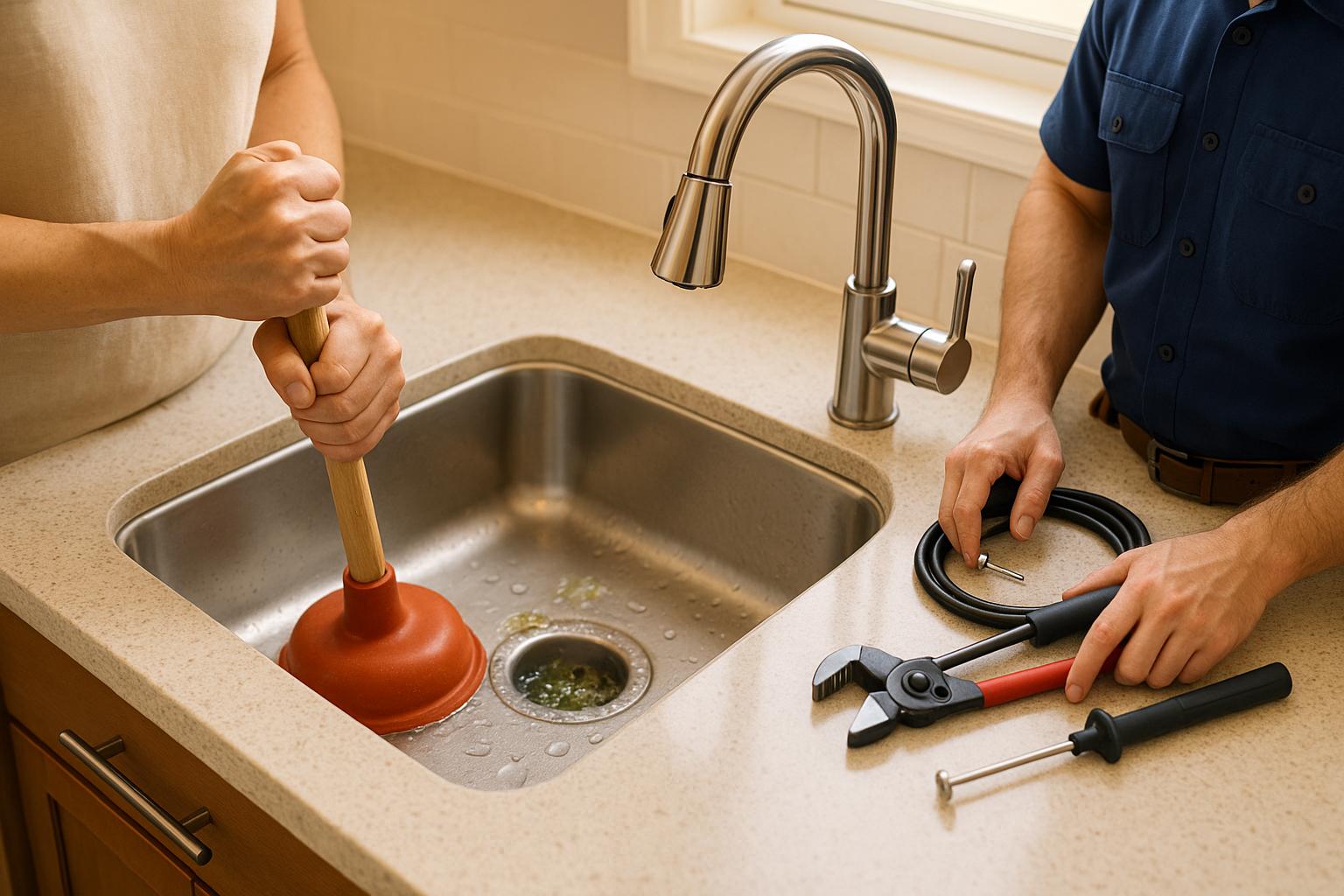
When your drain clogs, you face a choice: fix it yourself or hire a professional. DIY methods are cheaper upfront, using tools like plungers or drain snakes that cost $10–$50. They work well for minor, surface-level clogs caused by hair or food. But they often fail with deeper or recurring issues, and improper use can even damage pipes.
Professional services, costing $100–$800, are better for severe blockages or recurring problems. Plumbers use advanced tools like hydro jetters and video cameras to diagnose and resolve issues effectively, often preventing future clogs. While pricier, they save money long-term by avoiding repeated repairs or pipe damage.
Quick Comparison
| Factor | DIY | Professional |
|---|---|---|
| Cost | $10–$150 | $100–$800 |
| Effectiveness | Temporary fixes for minor clogs | Long-term solutions for all issues |
| Tools | Plungers, snakes, basic solutions | Hydro jetters, cameras, motorized equipment |
| Time | Hours of trial and error | Fast diagnosis and resolution |
| Risk | Pipe damage, chemical hazards | Low risk with trained experts |
For minor clogs, try DIY first. For recurring or severe issues, call a professional to save time, money, and stress.
DIY Priced Sewer Rodder or Pay A Plumber?? || Vevor Sewer Drain Cleaner Review
DIY Drain Cleaning Methods
When a drain clogs, many homeowners turn to simple tools and household remedies for a quick fix. Tackling the problem yourself can be an affordable way to handle everyday blockages.
Tools and Techniques You Can Use
A plunger is one of the most effective tools for clearing blockages. For sinks and tubs, a cup plunger creates enough pressure to push through hair or food clogs. On the other hand, a flange plunger is designed specifically for toilets.
For tougher clogs deeper in the pipes, drain snakes (also known as augers) are a great option. These flexible tools break apart or pull out blockages that plungers can’t reach.
If you prefer a chemical-free approach, household cleaning solutions can work wonders. A mix of baking soda and vinegar (or lemon juice) followed by hot water can clear organic buildup and eliminate odors. For grease clogs, pouring dish soap and hot water down the drain helps dissolve the fatty residue.
A shop vacuum set to liquid mode is another handy tool. By sealing it tightly around the drain, the vacuum’s suction can pull out stubborn debris. Additionally, a straightened wire coat hanger can help fish out visible clogs near the drain opening. Just remove the drain screen or stopper first to access the blockage.
While these methods are useful for minor clogs, they do have their limitations.
What DIY Methods Can and Cannot Do
DIY solutions are great for clearing simple blockages caused by hair, food particles, or light grease buildup. They work best when the clog is recent and hasn’t had time to harden or spread through the pipes. However, they often fall short for more severe or recurring issues. Problems like tree root intrusion, collapsed pipes, or heavy grease buildup require professional tools and expertise.
It’s also important to avoid relying on chemical drain cleaners. While they might seem like a quick fix, these products can corrode pipes, cause cracking, and even push clogs deeper into the system – especially in older plumbing. Overusing DIY tools can also damage pipes and joints, leading to leaks or water damage.
DIY Costs
DIY drain cleaning is budget-friendly – at least at first. A plunger costs between $10 and $20, while a drain snake runs from $20 to $50. Baking soda and vinegar cost about $5 to $10 for multiple uses. Chemical drain cleaners are priced at $10 to $15 per bottle, but their potential to harm pipes makes them a risky choice.
However, these initial savings can add up quickly if the problem persists. For example, a homeowner who spent $15 per bottle of chemical cleaner ended up spending $90 over six months, only to face a $300 emergency repair. A professional hydro-jetting service, costing around $250, could have solved the issue for good. Worse, repeated use of chemical cleaners can corrode pipe joints, leading to leaks behind walls and repair bills as high as $2,500. Weighing the long-term costs of DIY methods versus professional help can save you from costly surprises down the line.
Professional Drain Cleaning Services
When home remedies aren’t enough, professional plumbers step in with the tools and know-how to tackle even the toughest drain problems. Their specialized equipment and training allow them to not only clear blockages effectively but also reduce the chances of future issues.
Professional Tools and Methods
Plumbers come equipped with tools like hydro jetters, video inspection cameras, and motorized drain snakes to handle a variety of drain problems. Hydro jetting uses high-pressure water to blast away grease, tree roots, and other debris from sewer lines. Video inspection cameras provide a clear, real-time view inside pipes, helping plumbers locate and identify blockages caused by collapsed sections, roots, or heavy debris. Meanwhile, motorized drain snakes – available in different sizes – are designed to navigate intricate pipe systems and clear stubborn clogs that basic household tools simply can’t handle.
Professional Training and Safety
What sets professionals apart isn’t just their tools – it’s their training. Skilled plumbers don’t just fix the immediate problem; they identify underlying causes that might lead to recurring clogs. For example, they can uncover structural pipe issues or buildup that would otherwise go unnoticed.
Additionally, they’re trained to handle hazardous materials and operate equipment safely, ensuring the job is done without causing further damage or risk. Their focus is on providing long-term solutions rather than quick fixes.
Professional Service Costs
The cost of professional drain cleaning services varies based on the complexity of the issue and the tools required. Here’s a general breakdown:
- Basic drain cleaning (e.g., sinks, tubs, toilets): $100–$275
- Main line cleaning or issues involving multiple fixtures: $175–$600
- Video camera inspections: $100–$300
- Hydro jetting services: $250–$800
- Main sewer line blockages: $200–$500
Most plumbers charge $45–$150 per hour, with call-out fees ranging from $50 to $200 for standard hours. Emergency services, however, can cost two to three times more.
While professional services may seem costly upfront, they often save money in the long run. Proper diagnosis and permanent solutions help prevent recurring issues, water damage, and costly repairs. Regular maintenance, recommended every one to two years, can also extend the lifespan of your plumbing system and reduce the need for emergency services.
Investing in professional drain cleaning not only saves time and effort but also protects your property from potential damage. For complex or recurring problems, professional services provide peace of mind and long-term value.
sbb-itb-1e60d4b
DIY vs Professional Service Comparison
Understanding the differences between handling drain cleaning yourself and hiring a professional can help you make the best choice for your situation. Both approaches come with their own costs, levels of effectiveness, and risks. Here’s a closer look at how they stack up and what to consider for long-term outcomes.
Side-by-Side Comparison
Choosing between DIY and professional services isn’t just about the upfront cost. Here’s a breakdown of key factors:
| Factor | DIY Methods | Professional Services |
|---|---|---|
| Initial Cost | $5–$150 (tools and supplies) | $100–$800 (depending on the service) |
| Effectiveness | Works for minor clogs and temporary fixes | Solves deeper issues for long-term results |
| Tools Available | Plungers, basic drain snakes, chemical cleaners | Hydro jetters, video cameras, motorized equipment |
| Time Investment | Can take hours of trial and error | Quick diagnosis and resolution |
| Risk Level | Potential for pipe damage or chemical hazards | Low risk when handled by trained professionals |
| Best Use Cases | Simple sink or toilet clogs, routine maintenance | Severe blockages, recurring issues, or main line clogs |
DIY methods can be effective for minor clogs but often only scratch the surface of the problem. Professional services, on the other hand, use advanced diagnostic tools – like video cameras – to identify deeper issues such as tree roots or damaged pipes. They also rely on high-powered equipment to clear blockages that DIY methods simply can’t handle.
Long-Term Results and Hidden Costs
At first glance, DIY drain cleaning might seem like the cheaper option, but it can lead to recurring problems and unexpected expenses. For example, frequent use of store-bought solutions can erode pipe linings, and a failed DIY attempt could even result in flooding. Emergency repairs in such cases can cost $500 or more. Additionally, DIY fixes often don’t stop clogs from coming back within weeks or months.
Professional services, while more expensive initially, provide better value over time. They address root causes – like tree root intrusion or aging pipes – reducing the chance of repeat blockages. Scheduling professional maintenance every 1–2 years can save money in the long run by preventing costly emergencies and extending the life of your plumbing system.
The right choice depends on your specific situation. For older plumbing systems, professional services are often the safer and more economical option since they lower the risk of accidental damage. By weighing these factors, you can decide whether to tackle the issue yourself or call in an expert.
How to Choose the Right Approach
Deciding how to handle a plumbing issue often comes down to understanding the situation. A few key factors can help you determine whether a DIY fix will do the job or if it’s time to call in a professional.
Factors to Consider
The severity of the blockage is a major consideration. If you’re dealing with a single slow-draining sink or a minor clog that responds to plunging, it’s likely a surface-level issue you can handle yourself. On the other hand, if multiple fixtures are clogged, the drainage is consistently slow, or there’s a complete blockage, it could point to a deeper problem that requires professional attention.
How often the problem occurs is another clue. If the same drain keeps clogging over and over, there’s likely an underlying issue that simple DIY methods won’t fix.
Budget also plays a role. DIY tools can cost anywhere from $10 to $30, while professional services typically start at $100 and can go up to $300 for basic fixes. However, failed DIY attempts can lead to pipe damage that’s far more expensive to repair.
Safety and health risks are important to weigh as well. DIY solutions often involve harsh chemicals that can damage pipes over time, especially in older systems. This can lead to structural issues and costly replacements.
Finally, consider the urgency of the situation. Standing water in sinks or tubs is a red flag for a complete blockage that needs immediate attention. If water starts backing up into unused fixtures, it could signal a serious sewer line issue that requires emergency professional help.
These factors can help you decide whether to take a DIY approach or bring in an expert.
When to Try DIY First
DIY methods work best for minor, shallow clogs that haven’t been around for long. If you’re dealing with a single slow-draining sink, a toilet backing up for the first time, or a shower drain gradually getting clogged, DIY might be the way to go.
Blockages caused by hair, soap buildup, or food particles often respond well to simple tools like plungers or drain snakes. If you can locate the clog near the surface, you’ve got a good chance of success. DIY can also be a logical first step if you’re on a tight budget or short on time. However, be cautious with chemical cleaners – they might seem like a quick fix, but they can damage your pipes over time.
If your DIY efforts don’t work or the problem worsens, it’s time to explore professional options.
When to Call a Professional
Certain situations demand professional expertise. For instance, if multiple drains in your home are clogged at the same time, it’s usually a sign of a main sewer line issue. This type of problem requires specialized equipment and know-how to address properly.
Professionals use advanced tools like video inspection technology (which typically costs $300 to $500) to locate hidden issues and provide precise solutions. Foul odors from drains or gurgling sounds can also point to more serious problems, such as organic buildup or severe blockages, which need professional diagnosis.
Emergency situations – like water backing up, overflowing fixtures, or standing water – shouldn’t be ignored. These issues often indicate significant blockages that require immediate attention. Services like Longmont Emergency Plumbers offer 24/7 assistance for such urgent cases.
Older plumbing systems are another reason to call in an expert. Aging pipes are more vulnerable to damage from DIY methods, and professionals are better equipped to handle them safely while identifying potential issues before they escalate.
Conclusion
Deciding between handling a drain clog yourself or calling in a professional largely depends on how severe the blockage is and how long-lasting you want the solution to be. For minor clogs – like those caused by hair, soap residue, or food particles – DIY methods can often do the trick, especially if it’s just one slow-draining sink or tub. While DIY tools and products are cheaper upfront, professional services often offer a more durable and effective solution.
Professionals don’t just clear the immediate problem – they address the root cause. Techniques like hydro jetting and video inspections ensure thorough cleaning and help prevent recurring issues. This means fewer headaches and a reduced risk of future blockages.
It’s important to note that chemical drain cleaners, a common DIY fix, can damage your pipes over time. On the other hand, professionals are equipped to handle hazardous materials safely, reducing the risk of expensive repairs down the line. If you’re dealing with persistent clogs, multiple blocked drains, or issues that keep coming back, it’s wise to get a professional evaluation.
Routine professional maintenance can also extend the lifespan of your plumbing system and help avoid costly damage. Scheduling annual or biannual cleanings ensures everything runs smoothly.
For urgent situations – like water backups or multiple clogs – reliable help is just a call away. Longmont Emergency Plumbers offers 24/7 service to address emergencies and prevent further damage. Tackling plumbing problems early with professional expertise can save you money and keep your system running efficiently for years to come.
FAQs
What are the dangers of using chemical drain cleaners for DIY projects?
Chemical drain cleaners might seem like a quick fix for clogs, but they come with serious downsides. These products are packed with harsh chemicals that can cause burns to your skin and eyes and release toxic fumes that irritate your respiratory system. On top of that, the intense heat and chemical reactions they create can corrode your pipes, leading to long-term plumbing damage.
For tough clogs, consider safer options like using a plunger or a drain snake. If those don’t work, calling a professional plumber is a smarter move to prevent further damage or expensive repairs.
Why are professional drain cleaning services better at preventing future clogs than DIY methods?
When it comes to clearing out stubborn clogs, professional drain cleaning services offer a level of thoroughness that DIY methods simply can’t match. While tools like plungers or drain snakes might provide a quick fix, they often only tackle surface-level blockages. This means residue and buildup can remain, leading to the same frustrating problems cropping up again.
Professionals, on the other hand, bring advanced equipment and techniques to the table. For example, hydro jetting is a powerful method that blasts away debris, grease, and buildup, leaving your pipes clean and fully functional. Not only does this solve the immediate issue, but it also helps prevent future clogs. In the end, this approach can save you both time and money by keeping your drains running smoothly for longer.
When should I call a professional plumber instead of trying to clean a drain myself?
When you’re dealing with a severe blockage, recurring clogs, or more complex plumbing problems like tree roots invading your pipes or damaged lines, it’s usually best to call a professional plumber. While DIY solutions like plungers or drain snakes can handle smaller clogs, trying to tackle bigger issues on your own can sometimes make things worse, potentially leading to expensive repairs.
Professionals are especially helpful for advanced techniques like hydro jetting or when multiple drains are clogged, water flow is unusually slow, or bad odors suggest a deeper issue in your plumbing system. With their expertise and specialized tools, plumbers can quickly identify the root of the problem and provide a fix that lasts – saving you both time and money in the long term.