
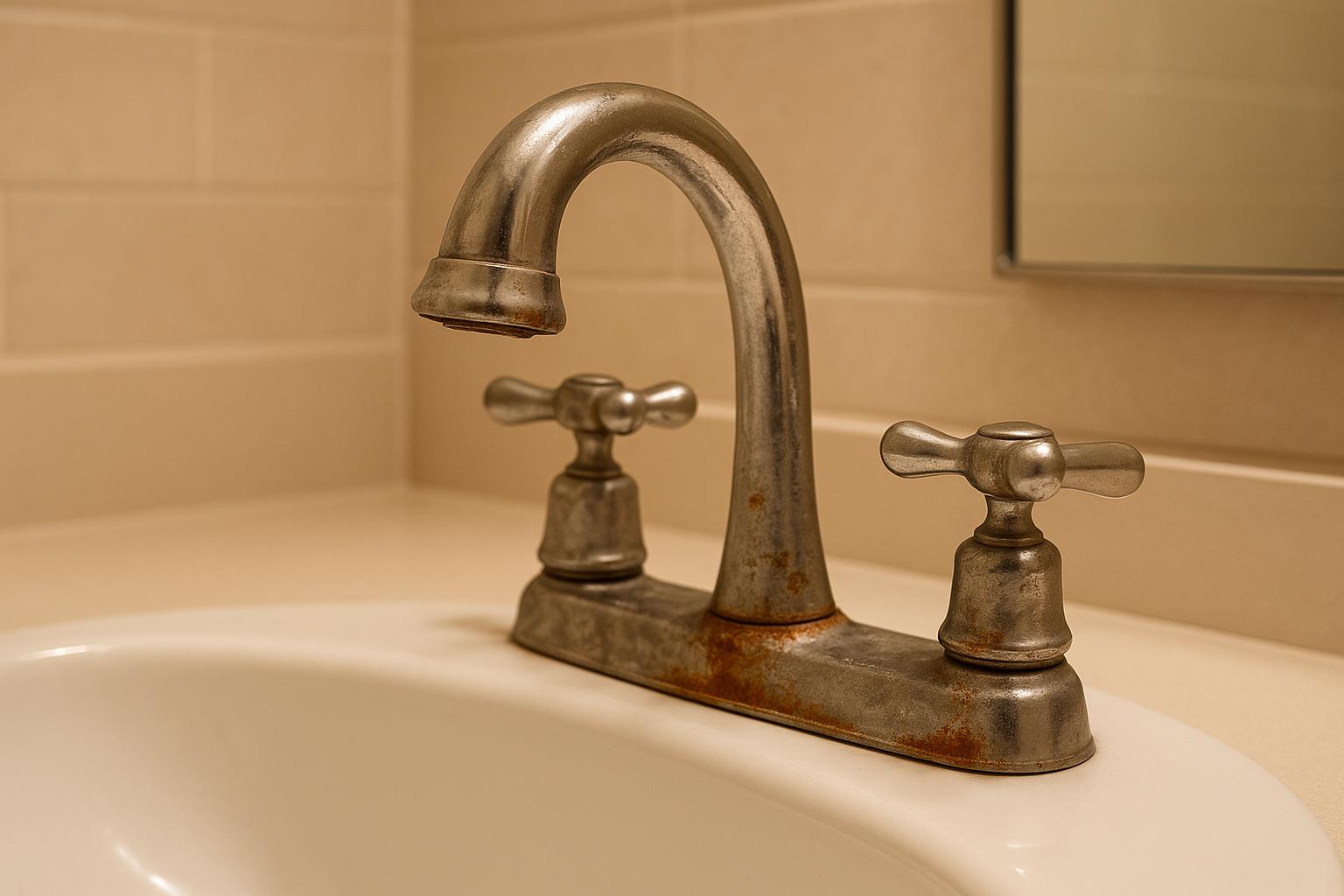
If your plumbing fixtures are leaking, rusting, or underperforming, it might be time to replace them. Ignoring these issues can lead to costly repairs, water waste, and even health risks like mold. Here’s what you need to know:
- Leaks: Persistent drips waste water and increase bills. Even a small leak can waste over 1,000 gallons yearly.
- Rust or Corrosion: Visible rust, green stains, or mineral buildup signal internal damage.
- Low Water Pressure: Weak flow often points to clogs or aging parts.
- Cracks or Mold: Hairline cracks and discoloration can lead to leaks and mold growth.
- Strange Noises or Odors: Gurgling sounds or bad smells indicate failing seals or internal damage.
Key Lifespans:
- Faucets: 15–20 years
- Toilets: 20–30 years
- Garbage Disposals: 10–12 years
Repair vs. Replace: Follow the 50% rule – if a repair costs more than half the price of a replacement, it’s better to upgrade. Newer fixtures save water, reduce bills, and improve home value.
Don’t wait for a complete failure. Address problems early to avoid bigger expenses and risks.
How to Know if Your Plumbing System is Outdated | Key Signs to Look For
Common Signs Your Plumbing Fixtures Need Replacement
Spotting early signs of fixture trouble can save you from costly water damage and emergency repairs. Here’s how to tell when it’s time to replace your plumbing fixtures.
Ongoing Leaks
Persistent leaks are a clear indicator that a fixture’s time is up. Recurring leaks usually mean the internal components have worn out beyond repair.
"One sure sign that it’s time to change your plumbing fixtures is the development of leaks that are impossible to fix." – Anchor Plumbing Services
Did you know a faucet dripping at just one drop every two seconds can waste over 1,000 gallons of water a year? On a larger scale, the average household loses more than 10,000 gallons annually due to leaks, with 10% of homes wasting 90 gallons or more daily. Beyond the water bill, leaky fixtures can damage valve stems, making it impossible to secure connections properly. Excess moisture also creates an ideal environment for mold and bacteria, which could affect water quality. Watch for unexplained spikes in your water bill, water stains on walls or ceilings, or musty odors near fixtures – these are all red flags for hidden leaks.
Rust, Corrosion, and Mineral Buildup
Rust, corrosion, or heavy mineral deposits suggest your fixtures are breaking down internally. Rust indicates oxidation, which weakens pipes and can lead to leaks. If you notice green or bluish stains on copper pipes, it’s a sign of corrosion caused by water reactions, particularly in acidic conditions. White, crusty deposits around joints or on pipes mean water is leaking through corrosion-created openings.
"Corrosion is common among metal pipes. Often, the corrosion is caused by oxidation or the aging of pipes." – Mr. Rooter Plumbing of San Francisco
Hard water speeds up corrosion and leaves mineral deposits that clog fixtures, reduce water flow, and make handles harder to use. If cleaning no longer restores performance or appearance, it’s probably time for a replacement. Upgrading to materials like stainless steel or brass can provide longer-lasting durability compared to standard fixtures.
Low Water Pressure or Poor Flow
Weak water pressure or sputtering flow often points to internal clogs or deteriorating parts that can’t be fixed. If your fixtures are 10–20 years old and their performance is declining, it may be more cost-effective to replace them than to keep repairing.
For reference, showerheads typically last 10–15 years, while faucets can last 15–20 years. If your fixtures are nearing these lifespans and you’re dealing with poor performance, upgrading can save you time and money in the long run.
Cracks, Discoloration, or Mold Growth
Hairline cracks in porcelain fixtures or noticeable discoloration are serious warning signs. Small cracks can expand and cause leaks, while discoloration often indicates prolonged moisture exposure, encouraging mold growth. Mold doesn’t just look bad – it can harm indoor air quality and lead to costly remediation.
Toilets, which usually last 20–30 years, should be replaced if you notice cracks or persistent stains. Cracks can lead to sudden failures that flood your bathroom. Regularly inspect exposed pipes under sinks and in utility areas for discoloration or cracks, and consult a professional if you’re unsure whether replacement is necessary.
Strange Sounds or Bad Odors
Odd noises like gurgling or hissing, along with persistent bad smells, suggest internal damage or failing seals. These issues tend to worsen over time, signaling that a major failure may be on the horizon. If cleaning doesn’t resolve recurring odors, it’s likely time for a new fixture.
| Fixture Type | Average Lifespan | Common Replacement Signs |
|---|---|---|
| Faucet | 15–20 years | Leaks, reduced water flow |
| Showerhead | 10–15 years | Clogs, poor spray pattern |
| Toilet | 20–30 years | Weak flush, hairline cracks |
| Garbage Disposal | 8–15 years | Jammed blades, unusual noise |
| Utility Sink | 10–20 years | Rust, low pressure, loose handles |
When repair costs start to creep up, it’s helpful to follow the 50% rule: if fixing a fixture costs more than half the price of replacing it, replacement is the smarter choice.
Specific Fixture Problems and When to Replace
Sometimes, repairing a fixture just doesn’t make sense anymore. Here’s a closer look at specific issues with toilets, faucets, and garbage disposals that often signal it’s time to upgrade rather than patch things up.
Toilets
Toilets are built to last, but even they have their limits. If your toilet clogs frequently, despite normal usage, it could point to internal flaws that repairs can’t resolve. Hairline cracks in the bowl or tank are another red flag – these can grow over time, leading to leaks or even flooding. A wobbly toilet base might mean the seal is failing, which could damage the flooring underneath.
Age is another key consideration. Older toilets, especially those made before 1994, use between 3.5 and 5 gallons of water per flush. Compare that to modern toilets, which use just 1.6 gallons per flush. If your toilet is over 25 years old, upgrading could save you money on water bills while improving performance. Plus, newer models often come with features like dual-flush systems or touchless operation – conveniences that older units lack. If you’re constantly repairing your toilet, replacement might be the smarter financial choice in the long run.
Faucets
Faucets also have a limited lifespan, typically around 10–15 years. Persistent leaks, even after multiple repairs, usually mean the internal components are too worn to function properly.
A single faucet dripping once per second can waste more than 3,000 gallons of water a year, which can hit your wallet hard. Other signs of trouble include difficulty turning the faucet on or off, grinding or squealing noises, and inconsistent water pressure even after cleaning. Visible mold around the faucet base is another warning sign, as it indicates prolonged leaks and moisture, which could harm indoor air quality.
"Upgrading faucets saves money and prevents water damage." – Done Right Today Plumbing, Heating & Air Conditioning
Modern faucets offer more than just reliability. Features like swivel spouts, pullout sprayers, and touch controls make everyday tasks easier. They’re also designed to use less water, which can boost your home’s efficiency and even its resale appeal.
Garbage Disposals
Garbage disposals usually last about 10–12 years, but certain problems suggest it’s time for a replacement. If your disposal clogs frequently or grinds food more slowly, the motor or internal components may be wearing out.
Motor issues are a common sign of trouble. If the unit hums but doesn’t grind or requires frequent resets, the motor might be failing. Leaks from the bottom of the disposal are often due to seal failure, which typically means replacement is necessary. Rust on internal parts or loud noises, like scraping or banging, also indicate significant wear that’s hard to fix.
"You should replace your garbage disposal if you see these 5 signs: It clogs often…You have to press the RESET button often; Food takes longer and longer to grind; The unit is leaky; The unit is making loud noises" – Plumbline Services
Age is another factor to keep in mind. Disposals over 12 years old are more likely to fail suddenly and may not be as efficient as newer models. While good maintenance can extend the lifespan to around 15 years, persistent problems after the 10-year mark usually mean it’s time for an upgrade.
| Problem Type | Repair or Replace? | Reason |
|---|---|---|
| Toilet: Frequent clogs and age over 25 years | Replace | High water usage and outdated design |
| Faucet: Persistent leaks after multiple repairs | Replace | Worn components and water waste |
| Disposal: Motor issues and age over 10 years | Replace | Reduced performance and rising repair costs |
If you’re dealing with multiple issues at once, replacing the fixture is often more cost-effective than tackling individual repairs. Plus, new fixtures can improve efficiency and functionality across the board.
sbb-itb-1e60d4b
Repair vs. Replace: How to Decide
Once you’ve spotted signs that your fixtures might need attention, the next step is figuring out whether to repair them or replace them outright. The decision often comes down to weighing the immediate costs of repair against the long-term value of replacement. By understanding the financial and practical implications of both options, you can avoid repeated expenses and make a choice that works best for your situation.
Cost Comparison: Repair vs. Replacement
A helpful guideline when deciding is the 50% rule. If the cost to repair a fixture is more than half the price of replacing it, opting for a replacement is usually the smarter financial move.
"A good rule of thumb is to replace your unit if your repair exceeds 50% of the cost of a new one." – Donnelly’s Plumbing, Cooling & Heating
Here’s a breakdown of typical costs for common plumbing fixtures:
| Fixture Type | Repair Cost Range | Replacement Cost Range | 50% Threshold |
|---|---|---|---|
| Toilet | $130 – $310 | $250 – $750 | $125 – $375 |
| Faucet | $125 – $350 | $150 – $350 | $75 – $175 |
| Garbage Disposal | $100 – $250 | $200 – $500 | $100 – $250 |
| Water Heater | $150 – $700 | $800 – $2,500 | $400 – $1,250 |
Smaller fixes, like unclogging a drain or repairing a leaky faucet, usually cost between $125 and $350. However, larger problems – such as pipe leaks – can quickly escalate to $500 or more. If you’re facing repeated repairs within a short time, those costs can easily exceed what you’d spend on a replacement. For example, if you’ve already spent $200 fixing a faucet this year and another repair costs $150, you’re likely better off replacing it altogether.
Factors to Consider
Cost isn’t the only factor to weigh. Other important aspects can help determine whether it’s time to repair or replace your fixture.
Age and Recurring Issues:
If you’re dealing with frequent repairs and the costs are starting to pile up, it might be time to upgrade. Keep an eye on how often issues arise and how much you’re spending annually [22].
Risk of Water Damage:
When fixtures pose a risk of significant water damage, replacement is often the safer option. A leaking toilet, for instance, can cause serious damage to floors or ceilings below, leading to costly repairs for your home. Water damage doesn’t just hurt your wallet – it can also warp wood, peel paint, and ruin flooring.
"Replacing plumbing fixtures at the right time can help prevent bigger issues down the line." – Magic Plumbing
Energy Efficiency:
Modern fixtures are designed to save water and energy. For example, newer toilets use just 1.6 gallons per flush compared to older models that use 3.5 to 5 gallons. Over time, these savings can help offset the cost of replacement.
Impact on Home Value:
Outdated or inefficient plumbing can turn off potential buyers if you’re planning to sell. Upgrading fixtures not only updates your home’s look but can also come with warranties, giving you added peace of mind.
Consulting a Professional:
If you’re unsure, it’s worth getting an expert opinion. Plumbers typically charge between $45 and $200 per hour depending on their experience and location. Gathering multiple quotes can also help you compare costs and make an informed decision. A professional assessment might uncover hidden issues that make replacement the more practical choice in the long run.
Balancing the upfront expense with long-term benefits, safety, and convenience is key. When repairs start to feel like a revolving door of costs or risks, replacing the fixture often proves to be the better investment.
Getting Professional Help for Fixture Replacement
When your fixtures start showing signs of wear or failure, calling in a professional is often the smartest move. A licensed plumber can ensure the job is done right, saving you from potential headaches and unnecessary expenses.
Why Professional Installation Matters
Replacing fixtures might seem like a simple task, but it’s surprisingly easy to make costly mistakes. As Parobek Plumbing & Air Conditioning® points out:
"When you have someone who isn’t licensed and trained install a toilet, replace a showerhead, or put in a stylish kitchen sink, you take the risk of scratching, cracking, or otherwise damaging the new fixture during the process. So, you end up with a damaged fixture that leaks, looks awful, or just plain doesn’t work."
Beyond the risk of physical damage, improper installation can void warranties and lead to expensive repairs down the line. Professional plumbers come equipped with the right tools, training, and experience to ensure your fixture is installed correctly and functions as it should. They also have the expertise to identify potential issues before they become major problems.
Another key benefit? Hiring a professional can actually save you money over time. As Parobek Plumbing & Air Conditioning® explains:
"A major benefit of calling a professional plumber to install fixtures is that it can save you money in the long run. If you install a fixture improperly or cause other damage, you’re likely to end up calling in a plumber anyway to address the issue."
Proper installation ensures that upgraded fixtures deliver the efficiency and savings they’re designed for, starting from day one.
What to Look for in a Plumbing Service
When searching for a plumber to handle your fixture replacement, keep these factors in mind:
- Licensing and Insurance: Verify that the plumber is licensed and insured to protect yourself and ensure quality work.
- Experience and Reputation: Choose a plumber with a solid track record and positive reviews.
- Transparent Pricing: Look for clear, upfront pricing with no hidden fees.
- Warranties and Equipment: Ensure the plumber offers warranties on parts and labor and uses modern tools for the job.
Why Choose Longmont Emergency Plumbers

For residents in Longmont, Longmont Emergency Plumbers provides reliable, professional fixture installation and repair services. Here’s why they stand out:
24/7 Availability and Same-Day Service
Plumbing problems don’t wait for convenient times. Whether it’s a toilet that stops working on a Sunday morning or a kitchen faucet that fails during a holiday dinner, Longmont Emergency Plumbers is available around the clock. They even offer same-day service for urgent issues, so you’re never left waiting.
Licensed and Certified Professionals
Every technician at Longmont Emergency Plumbers is fully licensed and certified. This ensures that all work meets local codes and industry standards, which in turn helps protect your manufacturer warranties. You can trust that the job will be done right the first time.
Comprehensive Fixture Services
Whether you need a simple faucet replacement or a more complex toilet installation, Longmont Emergency Plumbers has you covered. Their team handles everything from showers and drains to water heaters, making them a one-stop solution for all your plumbing fixture needs.
Transparent, Affordable Pricing
Budget surprises are the last thing anyone wants during a plumbing job. Longmont Emergency Plumbers provides clear, upfront pricing with no hidden fees. This way, you’ll know exactly what to expect before the work begins.
As their team emphasizes, "When facing plumbing issues, you need a dependable plumber to resolve them efficiently." For urgent fixture replacements or situations that pose safety risks, they recommend relying on a licensed local plumber for a prompt and effective solution.
Professional installation not only ensures your fixtures perform as intended but also gives you peace of mind knowing the job was handled by experts.
Conclusion: Knowing When It’s Time to Upgrade
Spotting the early signs of failing plumbing fixtures can save you from hefty repair bills and inflated utility costs. Persistent leaks, rust, low water pressure, or strange odors aren’t just minor annoyances – they’re red flags that your fixtures might be draining your wallet and putting your home at risk.
Upgrading your fixtures on time can make a big difference. For instance, a single leaky faucet can waste over 3,000 gallons of water annually, while a running toilet can use up to 200 gallons a day. Switching to a WaterSense labeled faucet can save 2.2 gallons per minute without compromising performance. These savings quickly add up, both for your water bill and the planet.
Beyond saving water, timely replacements help you avoid costly damage. Water leaks can harm floors, walls, and even your home’s structure, leading to expensive repairs. Plus, lingering moisture creates the perfect environment for mold, which not only affects your health but also requires pricey remediation. Modern fixtures help minimize these risks while offering better functionality and a fresh look for your home.
The efficiency of modern fixtures is hard to ignore. Older toilets, for example, can use up to 6 gallons per flush, while newer models use around 1.6 gallons. This shift not only slashes utility bills but also reduces environmental strain. On top of that, modern designs often include perks like touchless operation and improved water pressure, making daily use more convenient.
Upgrading plumbing fixtures isn’t just about avoiding damage – it can also boost your home’s resale value. Buyers are often willing to pay more for homes with reliable and efficient plumbing systems. Modern upgrades signal proper maintenance and eliminate concerns about hidden problems, making your home more appealing.
If you’re frequently repairing the same fixture, it’s a sign to replace it. A good rule of thumb: if the cost of repairs exceeds 50% of the replacement cost, it’s time to upgrade. Waiting for a complete failure can lead to emergency situations and unexpected expenses.
Planning ahead is just as important as addressing current issues. Regular plumbing inspections can help you catch potential problems early, allowing you to prioritize upgrades and budget accordingly. A professional plumber can help you decide which fixtures need immediate attention and which can wait.
Knowing the typical lifespan of fixtures also helps you stay ahead. Faucets generally last 15 to 20 years, toilets can last up to 50 years with proper care, and garbage disposals typically need replacement after 10 to 12 years. Being aware of these timelines can help you avoid sudden breakdowns.
Don’t wait for a disaster. Address warning signs as soon as they appear to prevent bigger, costlier issues. And remember, if repair costs keep piling up and surpass 50% of the replacement cost, it’s smarter to replace than to keep patching things up. Proactive upgrades are the key to saving money, avoiding stress, and keeping your home in top shape.
FAQs
What are the signs that a plumbing fixture needs to be replaced rather than repaired?
If your plumbing fixture is leaking constantly, has noticeable rust or cracks, it’s probably time to replace it. Other red flags include outdated designs, difficulty in operation, or stubborn buildup that refuses to come clean. Chipped or corroded surfaces and unusually high water bills from inefficiency are also signs pointing toward the need for a replacement.
Swapping out faulty fixtures doesn’t just help you avoid potential water damage – it can also enhance both the functionality and look of your home. If you’re uncertain about whether to repair or replace, reaching out to a professional plumber can guide you in making the right decision.
What are the advantages of replacing old plumbing fixtures with modern ones?
Upgrading your plumbing fixtures isn’t just about addressing leaks or worn-out components – it’s a chance to bring some real benefits to your home. Modern fixtures are built with water efficiency in mind, which means you can cut down on your water usage, lower your utility bills, and do your part to conserve resources.
These upgrades also come with long-lasting materials that stand up to wear and tear, saving you from the hassle and expense of constant repairs or replacements. Plus, they can give your home a fresh, updated look that boosts its curb appeal and market value, which is a big win if you’re thinking about selling.
And let’s not forget the convenience factor. Many newer designs include smart features like touchless faucets and built-in temperature controls, making everyday tasks easier while promoting eco-friendly living.
What is the 50% rule, and how can it help decide whether to repair or replace a plumbing fixture?
The 50% rule offers a straightforward way to decide whether to repair or replace a plumbing fixture. It suggests that if the repair costs are 50% or more of the fixture’s current value, replacing it is often the smarter choice. This can save you money over time by reducing the need for repeated fixes and upgrading to fixtures that align with modern efficiency and reliability standards.
Take a leaky faucet or an outdated toilet as examples. If the repair bill adds up to half the price of a new one, opting for a replacement can give you improved performance and peace of mind. Not sure what’s best? A professional plumber can guide you toward the most practical solution for your home or business.