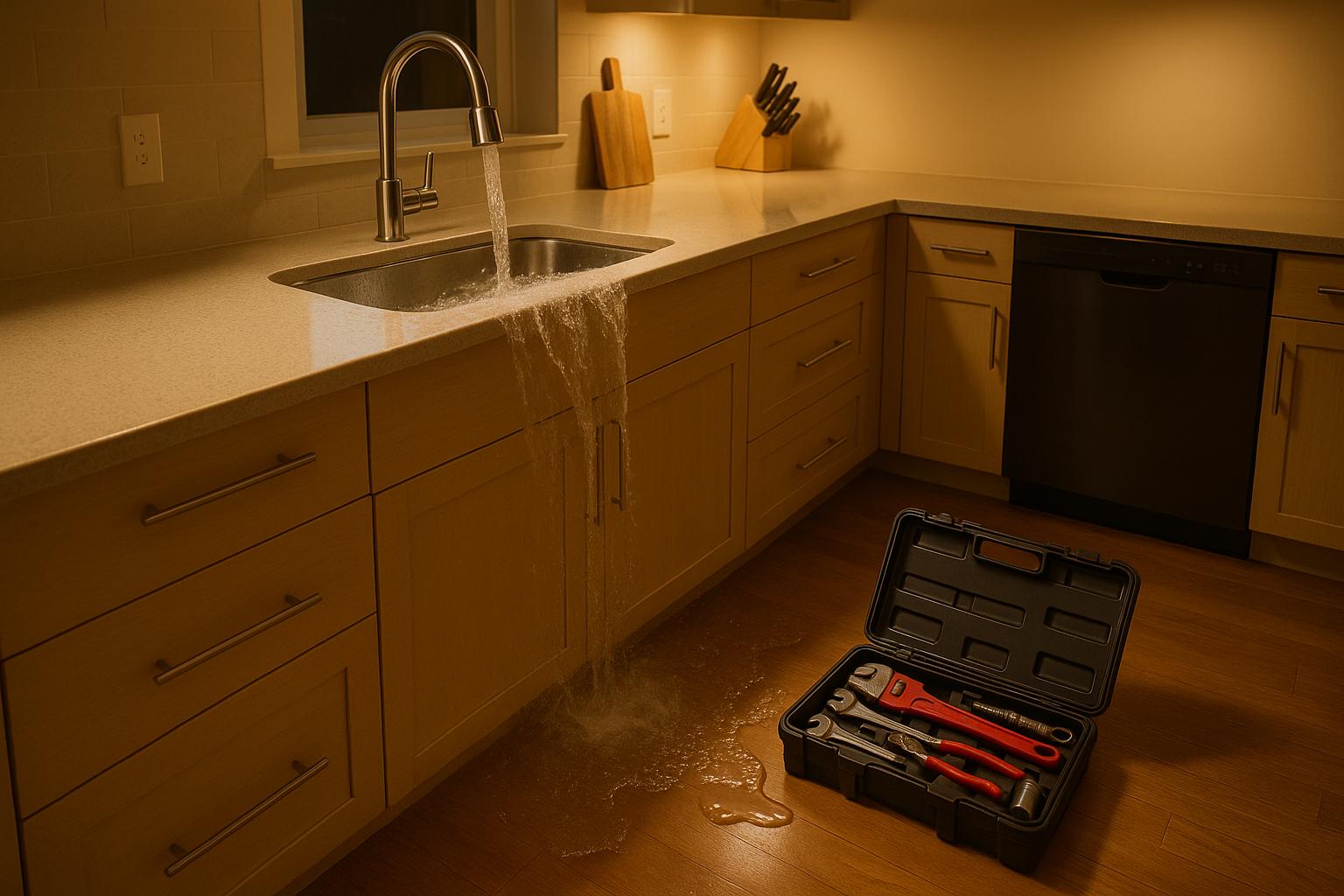
Plumbing emergencies can’t wait. Whether it’s a burst pipe flooding your home, a sewage backup posing health risks, or a complete loss of water supply, quick action is critical to prevent costly damage and safety hazards. Here’s when to call a 24/7 plumber:
- Burst Pipes or Major Leaks: A single pipe can release hundreds of gallons of water, causing thousands in damage.
- Sewage Backups or Overflowing Toilets: These bring harmful bacteria into your home and require immediate attention.
- No Water Supply: Total water loss may signal frozen pipes, main line breaks, or severe blockages.
- Water Heater Failures: Leaks or no hot water can disrupt daily life and may lead to gas or safety issues.
Act fast. Shut off the water supply, document the damage, and call a licensed 24/7 plumber to protect your home and health.
When Should You Call An Emergency Plumber? | Top Plumbing Issues You Can’t Ignore
Common Plumbing Emergencies That Need Immediate Help
Some plumbing issues can wait, but others require immediate attention to prevent damage, protect your health, and ensure safety.
Burst Pipes and Major Leaks
Burst pipes are among the most severe plumbing emergencies. When a pipe bursts, it can release hundreds of gallons of water in just a few hours, flooding your home and causing extensive damage to walls, floors, and ceilings.
Major leaks are just as pressing. While a dripping faucet might waste about 200 gallons of water a month, larger leaks can go unnoticed until thousands of gallons have already flooded your home. The financial impact adds up quickly – while minor repairs may cost between $150 and $300, flood restoration can escalate to $5,000–$15,000. Water damage is a common problem, making up roughly 24% of all insurance claims in the U.S.. Every moment counts when dealing with these emergencies.
Overflowing Toilets or Sewage Backups
Sewage backups are not just messy – they’re dangerous. When wastewater backs up into your home, it brings harmful bacteria and pathogens that can make you sick. In fact, around 2 million people get sick each year from sewage contamination.
Overflowing toilets are another health hazard. Contaminated water can quickly spread across floors, soaking into carpets, baseboards, and subflooring. These porous materials can trap harmful microorganisms, requiring costly cleanup efforts that range from $2,000 to $6,000. Addressing these issues immediately is critical to minimizing health risks and property damage.
Complete Loss of Water Supply
Losing access to water is more than just inconvenient – it can signal serious plumbing problems. A total water outage can disrupt daily life, and weather conditions can make the situation even worse. During hot summers, the lack of water can pose health risks, especially for vulnerable individuals. In freezing temperatures, the issue might point to frozen pipes that could burst as they thaw.
Sometimes, a complete loss of water supply indicates significant issues like main line breaks or severe blockages. Nearly 98% of basements will experience some form of water damage over their lifetime, showing how common and urgent these problems can be. Professional help is often necessary to resolve such situations promptly.
Water Heater Failures or Leaks
When your water heater fails, it’s not just an inconvenience – it can also be a safety concern. A broken water heater means no access to hot water, which is especially problematic during colder months. Leaks from the water heater can damage basements and utility rooms, leading to costly repairs.
Gas water heaters come with an added risk: if you smell gas near your heater, evacuate immediately and contact a professional. Ignoring these issues during extreme temperatures can worsen the situation. Water heater repairs require expertise, as improper fixes can lead to bigger problems. Professional intervention ensures the issue is handled safely and effectively.
Why Quick Professional Help Matters
When a plumbing emergency hits, every second counts. Acting fast can be the difference between a manageable repair bill and thousands of dollars in damages – not to mention the potential health risks that come with waiting.
Reducing Property Damage
Water damage doesn’t waste time. A burst pipe can release gallons of water in minutes, soaking floors, walls, and furniture. What might start as a $400–$1,500 pipe repair can snowball into extensive structural damage requiring costly restoration work.
Water spreads quickly, seeping into subfloors, behind walls, and into insulation. Once these materials are saturated, full replacements may be necessary. Even a small, slow leak – like one drip per second – can waste over 3,000 gallons of water annually. Beyond the water bill, that steady drip can ruin cabinetry, flooring, and surrounding structures over time.
"Delaying service for issues like burst pipes, sewer backups, or gas leaks can result in severe property damage, health risks, and higher repair costs." – Beehive Plumbing
Calling in a professional plumber immediately can stop the damage in its tracks. They’ll shut off the water supply, limit the spread, and prevent secondary issues that could end up costing far more than the initial repair.
Preventing Health and Safety Risks
Plumbing emergencies don’t just threaten your home – they can also pose serious health and safety risks. For example, mold can start growing within 24 to 48 hours of water exposure, leading to expensive remediation efforts and respiratory issues.
Sewage backups are another urgent concern. Raw sewage contains harmful bacteria and pathogens that can cause severe illnesses. The longer contaminated water lingers, the greater the exposure risk – especially for vulnerable groups like children and older adults.
Water and electricity are a dangerous combination. If water infiltrates electrical systems, it can lead to electric shocks, fires, or even electrocution. Gas-related plumbing problems add another layer of danger. If you smell gas near your water heater, it could signal a potentially explosive situation. Professional plumbers are trained to handle such high-risk scenarios safely and efficiently.
Standing water can also weaken your home’s structure over time. Even a seemingly harmless puddle can compromise floor joists, wall studs, or the foundation, creating long-term safety hazards.
Preserving Your Plumbing System
Emergency plumbing services don’t just fix immediate problems – they also address the root causes to prevent future issues. Burst pipes or major leaks often indicate underlying problems like poor installation, corrosion, or excessive water pressure. While DIY fixes might patch things up temporarily, they often miss these deeper issues, setting the stage for repeat failures.
The cost difference between quick fixes and major system overhauls is substantial. While minor repairs generally cost $100–$300, larger emergencies can easily climb to $500–$2,000 or more. Acting quickly with professional help can stop small issues from escalating into full-blown disasters.
Timely intervention also protects the longevity of your plumbing system. Unaddressed leaks put ongoing stress on pipes and joints, which can lead to premature wear and the need for extensive replacements. Emergency plumbers come equipped with specialized tools and expertise to ensure repairs are done right the first time, safeguarding your plumbing system and protecting your home for the long haul.
sbb-itb-1e60d4b
What to Do During a Plumbing Emergency
When a plumbing emergency happens, acting quickly can make a huge difference. The right steps can help you avoid serious damage to your home and keep repair costs under control while you wait for professional help.
Turn Off the Water Supply
The first thing you need to do is stop the water from flowing. Find your main water shut-off valve, which is often located in the basement, crawlspace, outside near the water meter, or near the water heater in homes with slab foundations.
There are usually two types of shut-off valves:
- Gate valves: These have a round handle that you’ll need to turn clockwise several times to stop the water flow.
- Ball valves: These use a lever handle that requires just a quick 90° turn to shut off the water completely.
If you can’t locate the main shut-off valve, check for individual valves near the problem area. These are often found under sinks, behind toilets, or near washing machines.
If water is near electrical outlets, immediately turn off the electricity at the circuit breaker. Water and electricity are a dangerous combination, so this step is critical for safety.
Check the Problem
Once the water is shut off, take a moment to assess the situation. Look at the damage and document it with photos or videos. Pay attention to any unusual signs, such as discolored water or recent plumbing work that might have contributed to the issue. This documentation can be helpful when explaining the problem to a professional or filing an insurance claim.
Call a 24/7 Plumber
Don’t wait – call Longmont Emergency Plumbers right away for expert help.
When you call, be ready to explain the problem clearly. Share details like where the issue is, how severe it seems, and what steps you’ve already taken, such as shutting off the water. If you know any background information about your plumbing system – like recent repairs or recurring problems – mention that too. It’s also helpful to let the plumber know the best way to access the affected area and point out any obstacles (like tight spaces or blocked paths) that could slow them down.
Take Steps to Limit Damage
While waiting for the plumber, you can take a few actions to reduce further damage. Open faucets around your home to relieve pressure in the plumbing system.
For smaller leaks, try temporary fixes like wrapping pipe tape around the leak or using clamps to slow the water flow. Place buckets or large containers under bigger leaks to catch water and prevent it from spreading.
Clean up standing water as soon as possible using mops and towels. Standing water can lead to mold growth in as little as 24 to 48 hours, so quick action is essential.
Clear the area around the problem to give the plumber easy access, and improve ventilation by opening windows or turning on fans. This can help reduce moisture and lower the risk of mold or mildew forming.
How to Choose the Right 24/7 Plumbing Service
When a plumbing emergency strikes, every second counts. Having a reliable emergency plumber on speed dial can save you from unnecessary stress, unexpected expenses, and even more damage. Picking the right service ahead of time ensures you’re prepared when the unexpected happens.
Key Traits to Look For
When evaluating plumbing services, it’s important to focus on a few critical factors:
Licensing and Insurance
This should be non-negotiable. A reputable plumber must have a valid state license and full liability insurance. These credentials show they’ve met the necessary standards and protect you from liability if something goes wrong. As Mizuki Hisaka, Contributing Writer at Angi, puts it:
"Choosing a plumber is all about finding someone who has put in the work, meaning having a state license, full-coverage liability insurance, and a written guarantee to back up their claims."
Always ask for proof, and double-check their license status on your state’s licensing board website.
24/7 Availability
Emergencies don’t wait for business hours. Make sure the plumber offers true 24/7 service, including weekends and holidays. Ask about their response times and whether they charge extra for after-hours calls.
Experience and Expertise
Plumbing emergencies require quick thinking and skilled hands. An experienced plumber can diagnose and resolve issues efficiently, minimizing damage and reducing the likelihood of recurring problems.
Transparent Pricing
No one wants to be hit with surprise fees in the middle of a crisis. Request a detailed, written estimate upfront. This helps you understand what’s included and what might cost extra.
Customer Reviews and Reputation
Online reviews can give you a good sense of a plumber’s reliability and professionalism. Look for consistent positive feedback about their timeliness, quality of work, and customer service.
Comprehensive Services
Emergencies come in all shapes and sizes. Choose a plumber who can handle a wide range of issues, from burst pipes and water heater failures to drain cleaning and sewage backups.
Why Longmont Emergency Plumbers Stands Out
Longmont Emergency Plumbers checks every box when it comes to these essential qualities. Here’s why they’re a top choice for plumbing emergencies:
- Always Available: Their team is on call 24/7, including weekends and holidays, with no excessive after-hours charges. You can count on them to show up when you need them most.
- Wide Range of Services: Whether it’s a burst pipe, a water heater issue, or a sewage backup, they’ve got the tools and expertise to handle it. They’re equipped to tackle both residential and commercial plumbing problems.
- Fast and Reliable: Longmont Emergency Plumbers understands the urgency of plumbing crises. Their technicians provide same-day responses, quickly assess the situation, and implement effective solutions to prevent further damage.
- Transparent Communication: They prioritize clear pricing with detailed written estimates. Their team also takes the time to explain the issue and the necessary repairs in simple terms, so you’re never left in the dark.
- Local Expertise: Being locally based, they’re familiar with Longmont’s unique plumbing challenges and building codes. This local knowledge allows them to resolve issues efficiently and effectively.
With Longmont Emergency Plumbers, you’re not just hiring a service – you’re gaining a trusted partner who’s ready to step in whenever an emergency strikes.
Conclusion: Act Fast to Protect Your Property
When plumbing emergencies strike, time is of the essence. Ignoring water damage for even a short period – just 24 to 48 hours – can lead to mold growth and bigger problems down the line.
Water damage isn’t rare either. It accounts for about 24% of all insurance claims in the U.S.. For homeowners, repair costs typically range from $1,000 to $5,000. But the impact goes beyond money. It disrupts your daily routine, affects your home’s structure, and can even harm your health.
This is where professional help becomes invaluable. Emergency plumbers might charge between $100 and $350 for a visit, but that cost is small compared to the thousands you might spend fixing unchecked water damage, removing mold, or repairing structural issues. Hiring a licensed plumber ensures the problem is diagnosed and resolved correctly the first time, saving you from more expensive headaches later. Acting quickly and calling in the pros isn’t just smart – it’s essential.
FAQs
What should I do right away if I think a pipe has burst in my home?
If you think a pipe has burst in your home, it’s important to act fast to limit the damage. Start by turning off your main water supply to stop the flow of water. You’ll usually find the shut-off valve near your water meter or where the main water line enters your house. After that, open up your faucets and flush your toilets to drain any leftover water and reduce pressure in the pipes.
If the burst pipe is near electrical outlets or appliances, turn off the electricity in the affected area to eliminate any risk of electrical hazards. Once you’ve taken these immediate precautions, reach out to a licensed plumber as soon as possible to assess and fix the issue. Acting quickly can save you from expensive repairs and additional problems down the line.
How do I know if I need a 24/7 plumber for a plumbing issue?
Determining if you need a plumber who’s available 24/7 comes down to how urgent the situation is and the potential damage it could cause. Emergencies like burst pipes, significant leaks, sewage backups, or overflowing toilets demand immediate attention. For instance, if water is pouring into your home and you can’t stop it, you should call a professional right away.
On the other hand, smaller problems – like a slow-dripping faucet or a minor leak under the sink – can usually wait until regular business hours. If you’re able to temporarily manage the issue, such as shutting off the water supply to a specific area, it’s probably not an emergency. Still, if there’s a chance that waiting could lead to serious damage or expensive repairs, it’s better to play it safe and reach out to a 24/7 plumber.
What health risks can sewage backups cause, and how can you stay safe while waiting for a plumber?
Sewage backups can introduce harmful bacteria, viruses, and other pathogens into your home, posing serious health risks. Exposure can lead to issues like nausea, diarrhea, respiratory problems, and skin irritations. These dangers are particularly concerning for children, seniors, and individuals with compromised immune systems.
While waiting for a plumber, it’s important to take precautions. Avoid direct contact with contaminated water, shut off the water supply, and refrain from using any plumbing fixtures. Wear protective gear such as gloves and masks, and ensure proper ventilation by opening windows. These measures can help minimize your exposure and safeguard your health until professionals can address the problem.