
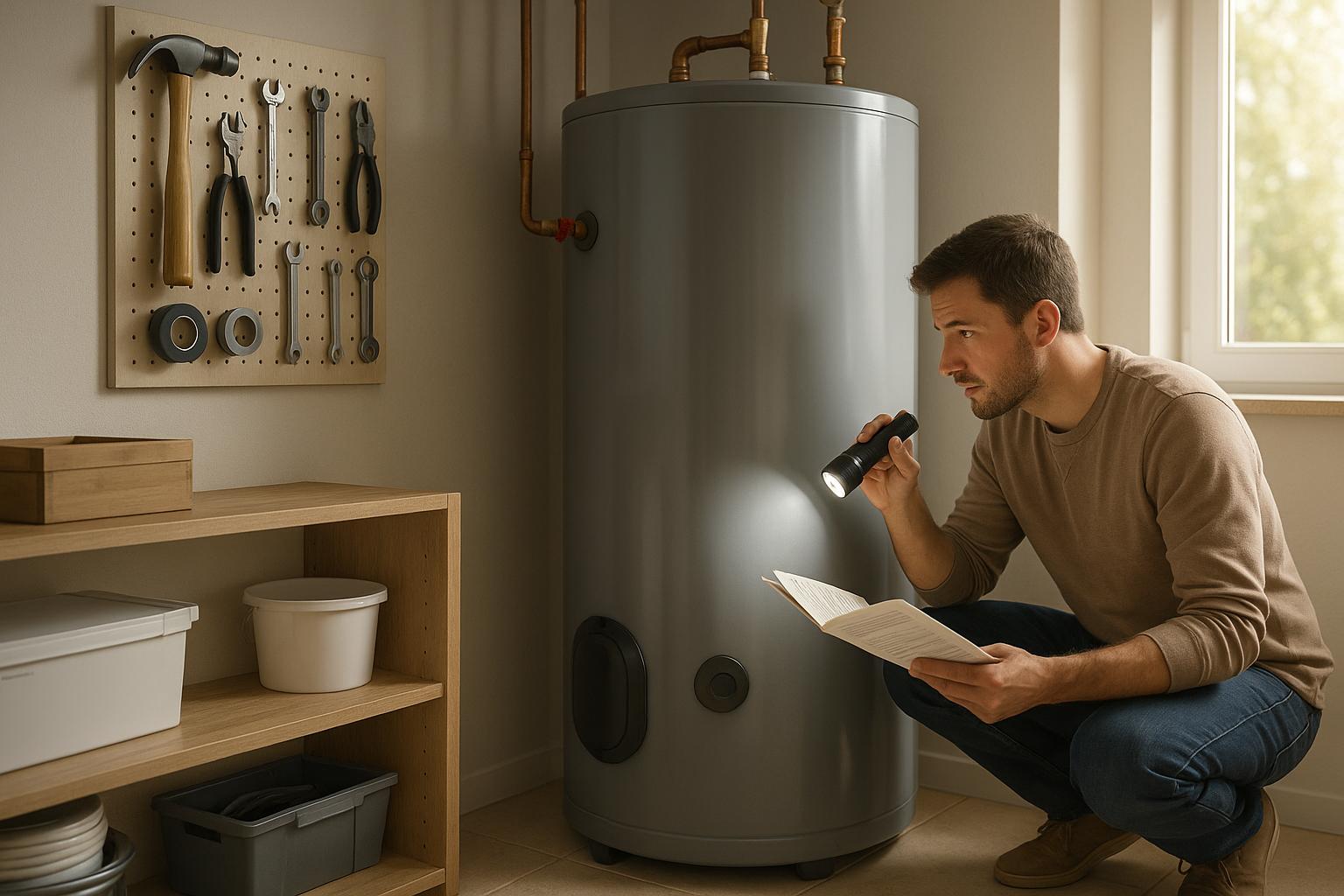
No hot water? Here’s what to do right now:
- Turn off the power: Shut off the electricity or gas supply to your water heater to stay safe.
- Check for leaks or gas smells: If you see water pooling or smell gas, take immediate action – turn off the main supply and call a professional.
- Try simple fixes:
- Reset the breaker or thermostat.
- Relight the pilot light (gas models).
- Flush the tank to remove sediment buildup.
- Call a pro if needed: Persistent issues, rust, major leaks, or an old unit (10+ years) often require professional help.
Key Fact: A water heater typically lasts 8–12 years and accounts for about 18% of your home’s energy use. Ignoring small problems can lead to expensive repairs or replacement.
If you’re unsure or the problem persists, prioritize safety and contact a licensed plumber.
What To Check If Your Water Heater Isn’t Working – Ace Hardware

Safety Steps Before You Start
When working with water heaters, safety should always come first. These devices involve electricity, gas, and high-temperature water, so taking a few precautionary steps can help you avoid burns, electrical shocks, or worse.
Turn Off the Power Supply
Before you do anything else, make sure to cut the power to your water heater.
- For electric water heaters: Start by turning off the power switch on the tank itself. Next, head to your electrical panel and locate the circuit breaker for the water heater. Pay close attention to your breaker chart – some heaters, especially those using a 240-volt supply, might require turning off two breakers instead of one. If you have a hybrid model that runs on a 120-volt supply, simply unplugging it from the wall outlet may suffice.
- For gas water heaters: Even though they primarily use gas, many models have electrical components for ignition or backup systems. Find and turn off the appropriate circuit breakers.
Let the Water Heater Cool Down
The water inside your heater can range from 120°F to 140°F – temperatures high enough to cause serious burns on contact. After shutting off the power, allow the water heater to cool before handling any components.
A cooling period of 2–3 hours is typically sufficient. This not only protects you from scalding but also minimizes the risk of electrical hazards when working on the system. Use thick gloves and safety goggles as an extra layer of protection against residual heat or unexpected water discharge.
Handle Leaks or Gas Smells
If you smell gas around your water heater, stop immediately and take emergency action. Natural gas is treated with a "rotten egg" odor to make leaks easier to detect.
- For gas smells: Shut off the main gas supply valve to your home right away. If you’re unsure where the valve is or cannot access it safely, leave the house immediately and call your gas supplier or 911 from a safe location. Never use a phone inside the house, as even a small spark could ignite the gas. Once outside, open windows and doors to ventilate the area and avoid using electrical devices, matches, or open flames. If you see flames from a gas leak, do not try to extinguish them yourself.
- For water leaks: Assess the severity of the leak. Small drips might be manageable, but significant flooding or major leaks require professional help. Severe leaks can cause structural damage and pose additional risks when combined with the water heater’s electrical components.
Once you’ve addressed any immediate safety concerns, you can move on to basic troubleshooting. If you’re unsure about any step, don’t hesitate to call a professional. When dealing with gas, electricity, and hot water, it’s always better to err on the side of caution.
Simple Troubleshooting Steps
Once you’ve ensured basic safety measures are in place, it’s time to start diagnosing the issue. These troubleshooting steps cover common problems and might just get your hot water flowing again – without needing to call in a pro. Here’s how to tackle them step by step.
Check the Power Supply
Electric water heaters depend entirely on electricity, making power issues a frequent cause of failure. Start by locating your home’s electrical panel and finding the circuit breaker labeled for your water heater. Electric models typically require 240 volts from a double-pole breaker.
If the breaker has tripped, reset it by flipping it fully to the "off" position before switching it back to "on." For gas water heaters, which also have electrical components for ignition, there’s usually just a single breaker to check. If the breaker trips again right after resetting, it’s time to call a professional. Some units have indicator lights to confirm they’re receiving power, while others may need a multimeter to test the current.
Make sure your water heater is hardwired to the breaker panel with the correct wire gauge and breaker size. Never plug an electric water heater into a standard 110-volt outlet – it’s unsafe and won’t work.
Check the Thermostat
The thermostat manages when the heating elements activate, ensuring your water stays at the desired temperature. Most water heaters are set to maintain a temperature between 120°F and 140°F – hot enough for household use, but not so hot that it risks scalding or wastes energy.
On electric models, the thermostat is usually behind an access panel on the side of the tank. Open the panel and check the temperature setting. If it’s too low, adjust it to at least 120°F. If the setting is correct but you’re still not getting hot water, the thermostat might be faulty.
For gas water heaters, you’ll find an external temperature dial near the bottom of the unit. Check that it’s within the recommended range, as it’s easy for this dial to get bumped or adjusted accidentally.
Relight the Pilot Light (Gas Models)
If your gas water heater suddenly stops delivering hot water, a blown-out pilot light might be the issue. Before relighting it, check for any gas leaks. If you smell a sulfur-like "rotten egg" odor or your carbon monoxide detector sounds an alarm, turn off the gas supply at the main valve, open windows, evacuate your home, and contact a licensed plumber immediately.
If it’s safe to proceed, follow your manufacturer’s manual for specific instructions. If you don’t have the manual, here’s a general guide:
- Turn the gas regulator to "Off" and wait five minutes.
- Open the access panel and locate the pilot burner and thermocouple.
- Set the regulator to "Pilot" and use the ignition button or a long lighter to ignite the pilot burner. Hold the button for about a minute to let the thermocouple heat up.
- Slowly release the button and check that the flame stays steady. Then, turn the gas valve to "On" and listen for the main burner to ignite.
If the pilot light keeps going out, the thermocouple might need replacing. A healthy pilot flame should be mostly blue with a small yellow tip and should cover about half an inch of the thermocouple tip.
Test the Reset Button
Electric water heaters are equipped with a reset button as a safety feature to cut power if the system overheats or encounters electrical problems. If the red reset button (located behind the upper access panel) has popped, press it firmly until you hear a click. You may also need to reset the circuit breaker.
If the reset button trips repeatedly, it could signal a deeper issue, like sediment buildup or a faulty thermostat. At this point, professional help is likely needed. While you’re at it, inspect the system for any visible leaks as part of your troubleshooting.
Look for Leaks
Leaks can not only reduce your water heater’s efficiency but also cause significant damage over time. Carefully inspect your water heater for any signs of leakage:
- Connections: Check where the cold-water inlet and hot-water outlet connect to the heater. Use a paper towel to wipe around these areas and look for moisture. Tighten any loose fittings if necessary.
- Temperature and Pressure Relief Valve: If this valve is releasing a continuous flow of water, it indicates a problem.
- Base of the Heater: Look for pooling water, which often signals internal corrosion and might mean it’s time for a replacement.
- Pipe Fittings: Inspect for corrosion or looseness, as even minor leaks can escalate quickly.
Pay attention to other warning signs, too, like strange noises (hissing or popping), foul odors that might point to bacterial growth, inconsistent water temperatures, or unusually high water bills. If you find a significant leak, shut off the water supply and power immediately.
If these steps don’t solve the problem – or if you encounter major leaks or other safety concerns – it’s time to call a professional plumber for a thorough diagnosis and repair.
Quick Fixes for Hot Water
If your hot water system is out of order, don’t worry – there are ways to manage until professional repairs are completed. Here are some simple methods to get hot water quickly and efficiently.
Boil Water for Immediate Use
One of the easiest ways to get hot water is by boiling it. Use a large pot (8–12 quarts) on your stovetop to heat water for tasks like washing dishes, cleaning surfaces, or even a quick sponge bath.
For smaller amounts, an electric kettle is a great option. Many models can heat up to 1.7 liters (about 7 cups) of water in under five minutes, making them perfect for tea, coffee, or small cleaning jobs.
Need hot water for sanitizing dishes? Submerge clean utensils in boiling water for 1–2 minutes to kill bacteria. Just remember, soap and scrubbing are still necessary to remove food residue.
If you’re using a microwave to heat water, place a wooden utensil in the container to prevent superheating. Always handle hot containers carefully – use hot pads to avoid burns.
If boiling water isn’t practical, you might want to try flushing your water heater tank to improve its performance.
Flush the Tank to Improve Performance
Over time, sediment can collect at the bottom of your water heater tank, reducing its efficiency. Flushing out a few gallons of water can sometimes restore better performance, especially if your heater is producing lukewarm water rather than being completely cold.
For gas water heaters, set the unit to "pilot" mode before starting. Locate the drain valve at the bottom of the tank – it usually looks like a garden hose connection. Attach a garden hose to the valve, and direct the water to a floor drain, outside area, or a large bucket. Open the valve and let 3–5 gallons drain out. Once done, close the valve and restore power to the heater.
After flushing, check if the hot water flow improves. If the water is still discolored or the heater isn’t working properly, it might be time to call in a professional or consider replacing the unit.
If these fixes don’t work, you’ll need to look for alternative ways to access hot water.
Alternative Hot Water Sources
When quick fixes aren’t enough, there are other ways to secure hot water temporarily. Here are some ideas:
- Use another water heater in your home: If you have a secondary water heater, you can transport hot water in clean containers to the areas where it’s needed.
- Try outdoor heating options: A camping stove or portable burner can heat water for basic washing tasks.
- Solar heating: Fill a black container with water and leave it in direct sunlight. This method works well on sunny days.
- Temporary rentals: For larger households or businesses, renting a portable electric water heater from a local equipment rental company can provide a steady supply of hot water until repairs are made.
- Borrow hot water: Neighbors, friends, or family members might be able to help. Fill clean containers with hot water to use for cooking, cleaning, or personal hygiene. Even a few gallons can make a big difference.
These solutions can help you manage until your hot water system is back up and running.
sbb-itb-1e60d4b
When to Call a Professional Plumber
While quick fixes might help you get by temporarily without hot water, some water heater problems demand professional expertise. Complex repairs can pose safety risks, cause further damage, or even void warranties. If basic troubleshooting doesn’t resolve the issue and the problem persists, it’s time to bring in an expert.
Persistent Power or Gas Issues
If your breaker keeps tripping, it’s a sign of deeper electrical problems. Overheating in the fuse box or loose wiring should never be ignored. In such cases, stop using the water heater and call a professional immediately.
For gas-powered water heaters, repeated issues with the pilot light could point to gas line problems. A pilot light that burns orange or yellow instead of blue often signals incomplete combustion, which requires a professional to inspect the gas burner or lines. Gas leaks are extremely dangerous and can lead to explosions if not addressed properly.
"The natural gas in a gas water heater has the potential to explode, and electric water heaters are high voltage pieces of equipment. Both can also contain some scalding hot water."
– Nuckols Plumbing & Gas, LLC
Avoid attempting repairs on gas connections or electrical wiring yourself. Licensed plumbers have the training, tools, and knowledge to handle these systems safely and ensure all work complies with safety regulations.
Major Leaks or Signs of Rust
Beyond electrical and gas concerns, physical damage is another red flag. If water is pooling around the base of your water heater, it’s a serious issue that simple troubleshooting won’t fix.
Rust on the tank or discolored water often points to internal corrosion. This type of damage usually means the tank is nearing the end of its lifespan. Keep in mind, most standard water heaters last about 10 years before needing replacement.
Unusual noises coming from the tank also warrant professional attention. For older water heaters, investing in a water leak alarm can help you catch problems early and prevent significant damage. Active leaks or visible rust should prompt immediate action from a professional.
When DIY Fixes Fall Short
If basic troubleshooting doesn’t solve the problem, it’s time for a professional evaluation. Persistent temperature issues, no hot water at all, or recurring malfunctions after attempted repairs often indicate complex problems that require specialized tools and expertise.
"DIY water heater repair is never a good idea."
– Dial One Johnson Plumbing, Cooling & Heating
Professionals can identify hidden issues like faulty thermostats or damaged heating elements. Mishandling components like the pressure relief valve could lead to catastrophic tank failure.
Longmont Emergency Plumbers offers 24/7 emergency services for water heater issues, including same-day assistance. Their licensed technicians are equipped to handle both residential and commercial systems safely, ensuring your hot water is restored quickly and in compliance with safety standards.
Don’t risk your safety or property by attempting complex repairs on your own. A professional plumber provides not only a lasting solution but also valuable advice on maintenance to help you avoid future problems. Reach out to a licensed plumber to restore your hot water system safely and effectively.
DIY Fixes vs. Professional Service
When your water heater breaks down, you’re faced with a choice: tackle the repairs yourself or call in a professional. Both options come with their own set of advantages and drawbacks, impacting everything from safety to cost and long-term performance.
Comparison Table
| Factor | DIY Fixes | Professional Service |
|---|---|---|
| Cost | Save on labor costs, only pay for parts | Higher upfront cost ($880-$1,800 for water heater installation), but includes labor and expertise |
| Safety | Risk of injury, electrical shock, or gas exposure | Licensed technicians trained in safety protocols and code compliance |
| Time | Can work on your schedule, but may take longer due to learning curve | Faster completion with specialized tools and experience |
| Results | Success depends on your skill level and problem complexity | Professional diagnosis ensures accurate repairs the first time |
| Warranty | No guarantee on your work, may void manufacturer warranty | Work typically comes with service guarantees and maintains manufacturer warranty |
| Tools & Equipment | Must purchase or rent specialized tools | Professionals bring all necessary equipment |
| Insurance Coverage | DIY mistakes often not covered by homeowner’s insurance | Professional work typically covered and insured |
For those with some experience, simple tasks like adjusting the thermostat, flushing sediment buildup, or replacing an anode rod can be manageable DIY fixes. These repairs not only save money on labor but also give you a chance to pick up new skills.
However, DIY repairs come with risks. As Brandon Thompson, Owner of Circle T Handyman, explains:
"It can quickly escalate, and without the right tools and expertise, repairs may lead to significant damage".
Even a small mistake during a DIY repair can result in water damage that costs thousands to fix.
On the other hand, professional plumbers bring not just expertise but also advanced tools and diagnostic techniques. They’re trained to spot hidden issues you might overlook and can often address multiple problems in one visit. While the initial cost of hiring a professional – ranging from $50 to $200 for emergency visits – may seem high, it often prevents even more expensive problems later.
Ultimately, the choice depends on your confidence, available time, and willingness to take on risk. For straightforward fixes like flushing sediment or adjusting temperature settings, DIY can be a smart, budget-friendly option. But for more complicated issues involving electrical components, gas lines, or persistent malfunctions, it’s safer to leave the job to a professional.
Attempting complex repairs without the necessary experience can lead to bigger problems, safety hazards, and even voided warranties. If your quick fixes don’t resolve the issue or the risks seem too high, professional help is always an option. Longmont Emergency Plumbers offers 24/7 services with licensed technicians who specialize in both residential and commercial water heater systems. They ensure the job is done safely and efficiently.
If you ever feel unsure or overwhelmed during a repair, it’s best to pause and call in an expert. Your safety and peace of mind are worth it.
Key Points to Remember
Before diving into repairs, keep these important tips in mind to handle your water heater issues safely and effectively.
Safety comes first when dealing with a malfunctioning water heater. Always turn off the power before attempting any troubleshooting. For gas water heaters, if you suspect a gas leak, immediately shut off the gas supply, evacuate everyone from the building, and contact your gas utility company along with a professional plumber. Safety should remain your top priority throughout the process.
Simple troubleshooting can often fix common problems. Issues like no hot water or inconsistent heating may be resolved by checking the power supply, thermostat settings, or the pilot light. Bob Formisano, a licensed architect and builder, explains:
"When a water heater isn’t heating or has other problems, you may be able to fix it by yourself. The repair might be as simple as adjusting a setting, pressing a reset button, or clearing sediment buildup".
Know when it’s time to call in the pros. If basic fixes don’t solve the issue or you notice major problems like gas leaks, suspected carbon monoxide issues, or a solid red light pointing to system failure, it’s time to bring in an expert. Additionally, if your water heater is over ten years old, replacement might be a better choice than repeated repairs. Acting promptly can prevent further complications.
Expert assistance is just a call away. Companies like Longmont Emergency Plumbers offer 24/7 emergency services with licensed technicians ready to handle repairs or replacements. If you’re ever unsure or feel overwhelmed, don’t hesitate to reach out. Your safety and peace of mind are always worth it.
FAQs
How can I tell if my water heater needs to be replaced instead of repaired?
If your water heater is over 10 years old, it might be time to start thinking about a replacement. Most tank-style water heaters last between 8 and 12 years, and as they age, they’re more prone to frequent problems.
Some telltale signs that your water heater could be on its last leg include inconsistent hot water, rusty or discolored water, or strange noises like popping or banging. Another red flag is noticing leaks or moisture around the unit, which often points to internal damage that usually requires a full replacement. Tackling these issues early can save you from the hassle of losing hot water when you need it most.
How do I safely relight the pilot light on my gas water heater?
If the pilot light on your gas water heater has gone out, you can relight it safely by following these steps:
- Locate the pilot light: Open the small access door below the gas valve to find the pilot light. A flashlight can help you see clearly if the area is dim.
- Set the gas control knob: Turn the gas control knob to the "Pilot" position and press it down. This will allow gas to flow to the pilot light. If there’s a separate pilot button on your water heater, press and hold that instead.
- Ignite the pilot: While holding down the knob or button, use a long lighter or the built-in igniter to light the pilot. Keep the knob pressed for about 30 seconds after the flame starts to ensure it remains lit.
- Restore the gas setting: Once the pilot light is burning steadily, turn the gas control knob to the "On" position. You should hear the burner ignite shortly afterward.
If the pilot light doesn’t stay lit, there might be a problem with the thermocouple or the gas supply. In such cases, it’s a good idea to call a professional plumber to handle the issue safely.
What should I do if my water heater is leaking and I can’t get a plumber right away?
If your water heater starts leaking and professional help isn’t immediately available, here’s how you can limit the damage:
- Shut off the water supply. Find the cold water shut-off valve on your water heater and turn it clockwise to stop the flow. If you can’t locate it, turn off the main water supply to your home instead.
- Turn off the power. For electric water heaters, head to your circuit breaker and switch it off. If you have a gas water heater, set the gas valve to "off" to avoid any safety hazards.
- Manage the leak. Use towels, buckets, or pans to catch any dripping water and keep it from spreading further. For smaller leaks or cracks, you might try a temporary fix, like wrapping waterproof or Teflon tape around threaded connections.
These steps can help you control the situation until a plumber can take a closer look. If the leak is severe and water is causing significant damage, consider calling emergency services or leaving the area for your safety.