
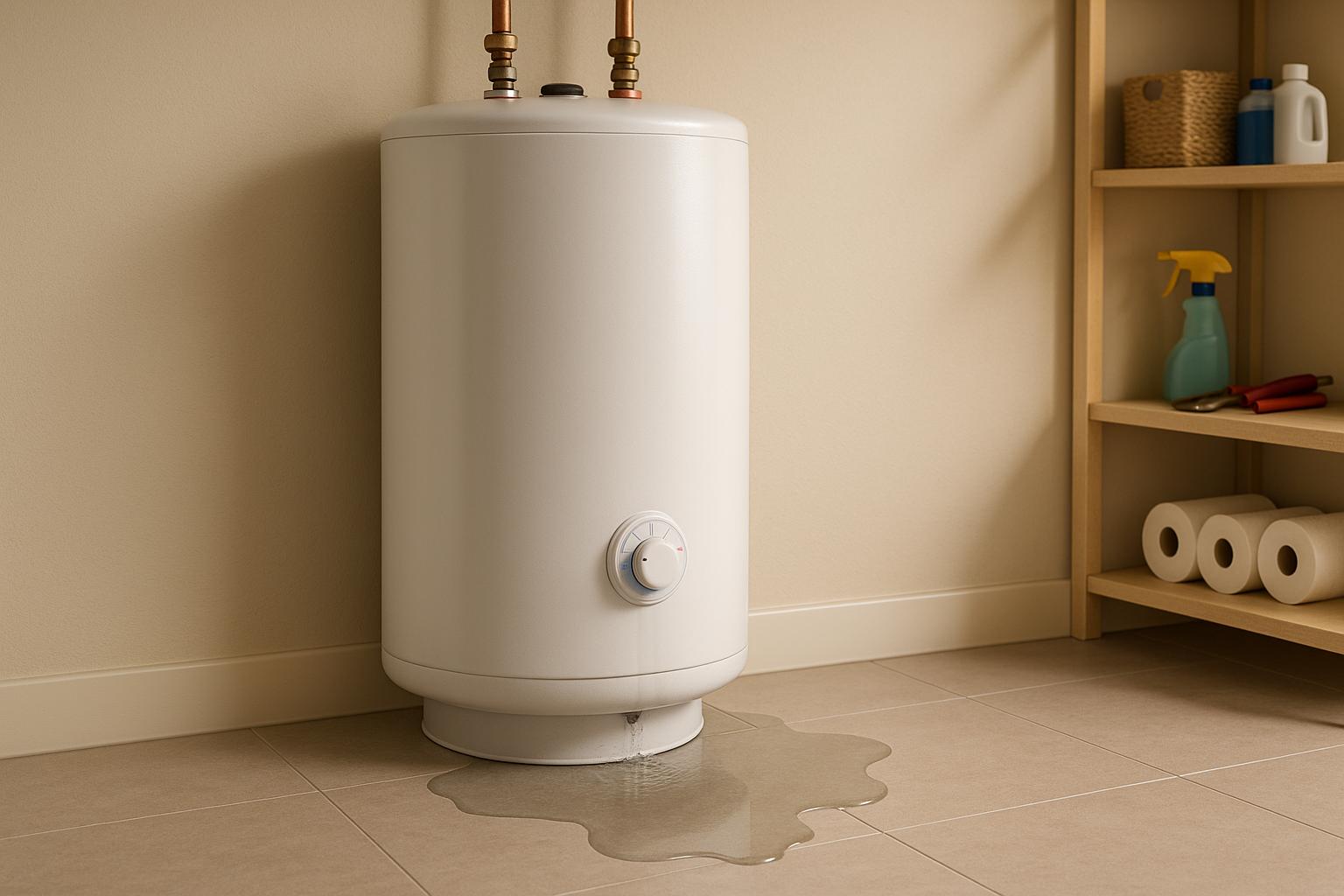
Did you know a leaking water heater can waste up to 10,000 gallons of water annually and cost you thousands in repairs? Here’s what you need to know:
- Common Causes: Aging tanks, rust, loose valves, high water pressure, sediment buildup, and worn pipe connections.
- Quick Fixes: Tighten connections, replace faulty parts, and flush the tank to remove sediment.
- When to Replace: If the tank is over 10 years old or leaking from the bottom, replacement is likely needed.
- Prevention Tips: Regular maintenance like annual flushing, checking the T&P valve, and monitoring water pressure can extend your water heater’s lifespan.
Key takeaway: Address leaks promptly to avoid costly repairs and water waste. For complex issues, call a professional plumber.
Hot Water Tank is Leaking? Top 5 Fixes | Repair and Replace
What Causes Water Heater Leaks
Understanding the common reasons behind water heater leaks can help you identify issues early and avoid expensive repairs. Most leaks are tied to a few typical problems that arise as your system ages.
Old Tanks and Rust Damage
Water heaters typically last around 8–10 years. Over time, the inner shell of the tank becomes vulnerable to corrosion. This corrosion weakens the tank’s structure, creating spots where leaks can form. Signs of rust-colored water, reduced water pressure, or visible rust around fittings are red flags to watch for.
Most tanks are designed with two layers: an inner shell that holds the water and an outer shell for insulation. When the inner shell corrodes, it compromises the integrity of the tank, increasing the likelihood of leaks.
Broken or Loose Drain Valves
Drain valves, located at the bottom of the tank, are used for maintenance tasks like flushing out sediment. However, these valves can wear out or loosen over time. Constant water pressure and aging seals may lead to leaks or cracks in the valve. If you notice puddles or mineral deposits near the valve, it might be time to tighten it or replace the seals.
High Water Pressure Problems
Excessive water pressure – above 80 psi – can strain your water heater and its connections. This often happens due to high temperature settings or malfunctioning temperature and pressure (T&P) valves. Over time, excessive pressure forces water through weak points in the system. To avoid this, set your water heater to a safe temperature of 120°F.
Sediment Build-Up
Mineral deposits tend to collect at the bottom of the tank, especially in areas with hard water. These deposits insulate the heating elements, forcing them to work harder and overheating the tank’s metal. Over time, this stress can cause cracks or holes in the inner lining. Regularly flushing the tank can minimize sediment build-up and extend the unit’s lifespan.
Loose or Worn Pipe Connections
The inlet and outlet connections where pipes attach to the water heater are subject to constant thermal expansion and contraction. As hot water causes the metal to expand and cool water makes it contract, fittings can loosen over time. This can result in drips or visible mineral deposits. Inspect these connections regularly and tighten or replace washers as needed.
For gas water heaters, additional issues may arise. Be aware of subtle warning signs like rust without visible leaks, which could indicate condensation problems, or the sound of water dripping onto the burner during operation. Both can signal tank failure.
How to Find Where Your Water Heater is Leaking
If you think your water heater might be leaking, the next step is figuring out exactly where the problem lies. Safety should always come first – water combined with electricity or gas can be dangerous. Taking a careful, step-by-step approach can help you stay safe while identifying the issue.
Safe Inspection Steps
Before you start, turn off the power supply to the water heater. For electric models, switch off the circuit breaker. For gas heaters, set the gas control valve to "pilot." Then, shut off the water supply by turning the cold water inlet valve, which is usually located at the top of the tank.
Make sure the area around the unit is well-ventilated, especially if you have a gas water heater. Installing a carbon monoxide detector nearby is a smart precaution. Allow the unit to cool for at least 30 minutes after shutting it off before getting too close.
Next, check for pooling water, drips, or stains around the base of the heater. Look at the surrounding walls for discoloration, which could indicate a slow leak. Examine all pipes and connections leading to and from the tank for moisture, damp spots, or corrosion.
Feel around the pipes and the back of the heater for hidden moisture that might not be immediately visible. Pay close attention to hard-to-see areas since leaks often occur in concealed spots. Look for mold or mildew nearby, as these are signs of ongoing moisture issues.
Listen carefully for sounds such as hissing, sizzling, gurgling, or popping. These noises can point to active leaks or sediment buildup inside the tank, which may compromise its structure.
Conducting regular inspections every couple of months can help you catch small issues before they turn into larger problems. During these checks, watch for signs like unusual water color, reduced hot water pressure, or strange noises from the heater. Once you’ve ensured safety, focus on pinpointing the leak by determining whether it’s coming from the top, bottom, or side of the unit.
Types of Water Heater Leaks
Knowing where leaks commonly occur can make your inspection more efficient. Top-of-unit leaks are often caused by problems with the cold water inlet valve, hot water outlet connections, or the temperature and pressure (T&P) relief valve. Check all pipes and tubes where they connect to the tank for any signs of dripping or steady water flow.
Leaks at the bottom of the unit may come from the drain valve or indicate more serious tank issues. Look for water pooling beneath the heater and inspect the drain valve for leaks. While some bottom leaks are minor, others can signal significant tank damage requiring replacement.
Side leaks usually involve the T&P relief valve, which is designed to release water if the pressure or temperature inside the tank gets too high. However, if this valve is constantly dripping, it could point to deeper pressure-related problems that need attention.
Identifying the type of leak early can help minimize damage. You may need to remove insulation or use a flashlight to thoroughly examine hard-to-reach areas.
| Leak Location | Common Causes | Severity Level |
|---|---|---|
| Top of Unit | Loose inlet/outlet connections, faulty T&P valve | Repairable |
| Bottom of Unit | Drain valve issues, tank corrosion | Minor to major |
| Side of Unit | T&P valve problems, pipe connections | Repairable |
Keep an eye on your water bills – unexplained increases can signal a leak. Even a small drip can waste nearly 1,660 gallons of water annually, costing you about $35. On average, households lose 10,000 gallons of water each year due to leaks throughout the home.
If you notice rust-colored water, significant corrosion, or loud rumbling and banging sounds, these are often signs of serious internal damage rather than minor connection issues. In such cases, it’s best to call a professional to assess whether the unit can be repaired or needs replacing.
sbb-itb-1e60d4b
How to Fix Water Heater Leaks
Once you’ve pinpointed where the water heater is leaking, you can begin repairs based on the source of the problem. Before starting, always turn off the water, gas, and power supplies to ensure safety.
Tightening Loose Connections and Valves
A lot of water heater leaks are caused by loose connections, which can often be fixed by simply tightening them. Before you begin, it’s a good idea to drain some water from the tank to minimize spills – have a container ready to catch any drips. For leaks at the drain valve (located at the bottom of the tank), use pliers or channel locks to tighten the valve securely, giving it a small extra turn. Be cautious not to over-tighten, as this can damage the valve. Once tightened, turn the water supply back on and check if the leak persists. If it does, the valve’s internal washer may need replacing.
The same approach works for other connection points, like the cold water inlet and hot water outlet at the top of the unit. These connections can loosen over time due to the tank’s expansion and contraction from heating cycles.
Draining the Tank to Remove Sediment
Sediment buildup inside the tank can cause damage and lead to leaks by creating hot spots that weaken the tank lining. Draining and flushing the tank annually helps remove this buildup and extend the heater’s life.
First, allow the tank to cool completely – leaving it overnight is safest. Attach a garden hose to the drain valve, directing the other end to a floor drain, outside area, or large bucket. Placing a colander at the hose’s end can catch sediment and prevent clogs. Open the drain valve and let the water flow out. Initially, the water may look discolored and contain visible sediment. Once the tank is empty, turn the cold water valve back on to flush out any remaining debris until the water runs clear.
If the drain valve clogs, gently press on the hose to dislodge the sediment. Keep in mind that older valves, especially ones that haven’t been used in years, might break easily. After flushing, close the drain valve, remove the hose, and restore the water supply. Wait at least 15 minutes for the tank to refill before turning the power back on (for electric units) or relighting the pilot and restoring gas service (for gas units).
If your water heater is over a decade old, draining and flushing could reveal more serious underlying issues. In these cases – or if you’re unable to complete the process – it’s best to call a professional. Once these steps are done, assess whether your heater needs further repairs or a full replacement.
When to Repair vs Replace Your Water Heater
Not all leaks can be fixed with simple repairs. Sometimes, replacing the water heater is the smarter, more cost-effective option. The decision to repair or replace depends on factors like the unit’s age and the nature of the problem. Most water heaters last between 8 and 12 years, though well-maintained units can sometimes reach 15 years.
Repairs are usually a good choice for water heaters under 10 years old (or up to 15 years for tankless models), especially if the issue involves a replaceable part, and there are no other signs of system failure. Repair costs typically range from $220 to $978. For example, replacing a heating element might cost $15 to $60 for the part or $200 to $300 with professional labor.
However, if the leak originates from the bottom of the tank, it often indicates internal corrosion or a damaged tank liner, which generally means replacement is necessary. As expert Clif Beam puts it:
"If it’s leaking, it’s a gonner. They are not serviceable once the tank inside the jacket is breeched."
Other signs that replacement might be needed include rust-colored water, persistent leaks despite repairs, unusual noises, rising energy bills, and general inefficiency. Sometimes, a slow leak is an early warning of a more significant failure.
| Repair Scenario | Replacement Scenario | Cost Consideration |
|---|---|---|
| Unit under 10 years old | Unit over 10–12 years old | Repair: $220–$978 |
| Valve/connection leak | Bottom tank leak | New 50‑gal electric: ~$2,500 |
| Single component failure | Multiple system issues | New 50‑gal gas: ~$3,250 |
| No rust or corrosion | Rust‑colored water | Tankless unit: ~$6,000 |
When replacing your water heater, newer models often provide better energy efficiency, which can help offset the higher upfront cost through reduced monthly bills. For example, a standard 50-gallon electric water heater costs around $2,500, while a gas version is about $3,250. High-efficiency models, such as heat pumps, can cost around $5,000. The location of the leak is also a key factor: leaks at the top of the unit are often easier to repair, while leaks at the bottom usually signal internal damage that requires replacement.
Preventing Water Heater Leaks and Getting Professional Help
Once you’ve tackled fixing leaks, the next step is making sure they don’t happen again. Regular maintenance is the key to keeping your water heater in good shape, saving you money on repairs, and ensuring it lasts as long as possible. With the right care, most water heaters can last anywhere from 8 to 20 years, depending on upkeep and water quality.
Regular Maintenance Tips
Routine checks and maintenance can go a long way in preventing costly issues. Here are some practical tips to keep your water heater running smoothly:
- Flush the tank annually: This removes sediment buildup, which can harm efficiency and shorten your heater’s lifespan. If you live in an area with hard water, consider flushing it more often to combat mineral deposits.
- Test the T&P valve yearly: Lift the valve’s lever to release water. If no water flows, it’s time to replace the valve. This ensures proper pressure release and prevents dangerous pressure buildup.
- Inspect the anode rod every 3–5 years: The anode rod helps prevent corrosion by attracting harmful elements. Replace it when only the bare wire is left.
- Check for leaks monthly: Leaks waste a surprising amount of water – up to 10,000 gallons annually for the average U.S. household. Spotting leaks early can save both water and money.
- Monitor water pressure: High pressure can stress your system. Installing a pressure-reducing valve or a thermal expansion tank can help.
- Set the temperature to 120°F: This setting is hot enough for daily use but prevents scalding and reduces energy costs by up to 5% for every 10°F decrease. It also slows down mineral buildup and corrosion.
Here’s a quick reference table for these tasks:
| Maintenance Task | Frequency | Key Benefit |
|---|---|---|
| Flush Tank | Annually (or more in hard water areas) | Removes sediment, improves efficiency, and extends tank life |
| Test T&P Valve | Annually | Ensures proper pressure release |
| Inspect Anode Rod | Every 3–5 years | Prevents tank corrosion |
| Check for Leaks | Monthly | Detects and resolves issues early |
| Monitor Water Pressure | As needed | Prevents system stress and premature failure |
Professional Water Heater Services from Longmont Emergency Plumbers

While regular DIY maintenance can handle minor issues, there are times when professional expertise is non-negotiable. Complex problems require the tools and knowledge only professionals can provide, ensuring the job is done safely and effectively.
Keeping your water heater in top condition not only protects your home but also ensures a steady supply of hot water. Longmont Emergency Plumbers offers a full range of water heater services to keep your system running smoothly. Their 24/7 emergency service means you’re never stuck without hot water, even on weekends or holidays. Whether it’s a sudden leak, a complete breakdown, or routine maintenance, their skilled technicians provide same-day service for both homes and businesses in Longmont, CO.
Professional services include in-depth system inspections, tank flushing, valve testing, and early detection of potential issues. Early intervention by professionals can prevent small problems from turning into major emergencies.
It’s time to call in the experts if you notice any of the following signs:
- Hot water runs out faster than usual
- Water isn’t as hot as it used to be
- Temperatures fluctuate unpredictably
- Low hot water pressure
- Discolored or foul-smelling water
- Visible leaks
- Unusual noises coming from the unit
These symptoms often point to underlying issues that require specialized tools and expertise to diagnose and fix properly.
For more serious concerns – like gas line issues, major water supply connections, or ensuring compliance with building codes – professional assistance is essential. Attempting these repairs yourself can create safety risks and may even void your warranty. Professionals ensure repairs meet local standards and deliver long-term reliability.
Even if your water heater seems to be working fine, scheduling annual professional inspections is a smart move. These preventive checkups can extend your system’s lifespan and help catch potential problems before they escalate into costly repairs.
Conclusion
Water heater leaks often stem from a few common culprits: aging tanks, faulty valves, excessive pressure, sediment buildup, or loose connections. While some issues – like tightening fittings or adjusting water pressure – can be tackled as DIY fixes, more complex problems demand professional attention to ensure safety and lasting solutions.
Consider this: the average household loses nearly 10,000 gallons of water each year due to leaks, with 10% of homes wasting 90 gallons or more every single day. Beyond the environmental toll, these leaks can lead to costly repairs if left unchecked.
That’s why addressing leaks promptly is so important. For complex repairs or safety concerns, relying on a licensed plumber is essential. Professionals bring the right tools, expertise, and knowledge of local safety codes to handle the job properly, avoiding further damage and ensuring reliable results.
If you’re in need of expert help, Longmont Emergency Plumbers provides 24/7, same-day water heater repairs and maintenance to safeguard your home from expensive damage.
Keep in mind that water heaters generally last between 8 and 12 years. Regular professional maintenance, combined with occasional homeowner inspections, can help extend their lifespan and prevent unexpected breakdowns. If you spot signs like discolored water, strange noises, or visible leaks, don’t wait – reach out to Longmont Emergency Plumbers right away to protect your home and maintain your family’s comfort.
FAQs
How can I tell if sediment buildup is causing my water heater to leak, and what should I do about it?
If your water heater starts leaking due to sediment buildup, there are a few telltale signs to watch for. You might hear unusual rumbling or popping sounds, notice cloudy or rusty water coming from your taps, experience a drop in hot water flow, or see leaks around the pressure relief valve. These symptoms often point to sediment collecting inside the tank.
To address this, start by flushing the tank to clear out the sediment. If the pressure relief valve is the source of the leak, check it carefully and replace it if needed. You can also reduce the water temperature to about 120°F to slow down future sediment accumulation. Performing regular maintenance, such as flushing the tank once a year, can help you avoid major problems and keep your water heater running longer.
What dangers can a leaking water heater cause, and how soon should I call a professional?
A leaking water heater isn’t just an inconvenience – it can cause major damage if left unaddressed. Water leaks have the potential to warp wood, ruin drywall, and destroy flooring, leading to expensive repairs. Over time, these issues can snowball, and there’s also the added risk of mold growth, which can compromise indoor air quality. On top of that, leaks near electrical wiring can create serious safety hazards.
If you notice a severe leak, like water pooling or gushing, you need to act immediately. Even small drips shouldn’t be ignored for too long, as they can quickly escalate into more significant problems, including flooding or a total system breakdown. To prevent further damage, it’s a good idea to call a professional plumber right away to inspect and fix the issue.
What simple maintenance tasks can help prevent water heater leaks, and when is it time to call a plumber?
To minimize the risk of water heater leaks, a bit of regular upkeep goes a long way. Start by flushing the tank every six months to clear out sediment that can accumulate over time. Make it a habit to inspect the anode rod and replace it if it shows signs of wear. An annual check of the pressure relief valve is also essential to ensure it’s functioning properly. Don’t forget to examine all connections for corrosion or damage. For an added layer of protection, consider placing a drain pan beneath the water heater to catch minor leaks and reduce the chance of water damage.
If you encounter persistent leaks, visible rust or corrosion on the tank, lower water pressure, or strange noises coming from the heater, it’s time to call in a professional plumber. Severe leaks or water damage demand immediate attention to prevent costly repairs. Addressing these problems early can help you avoid unnecessary headaches and expenses down the road.